





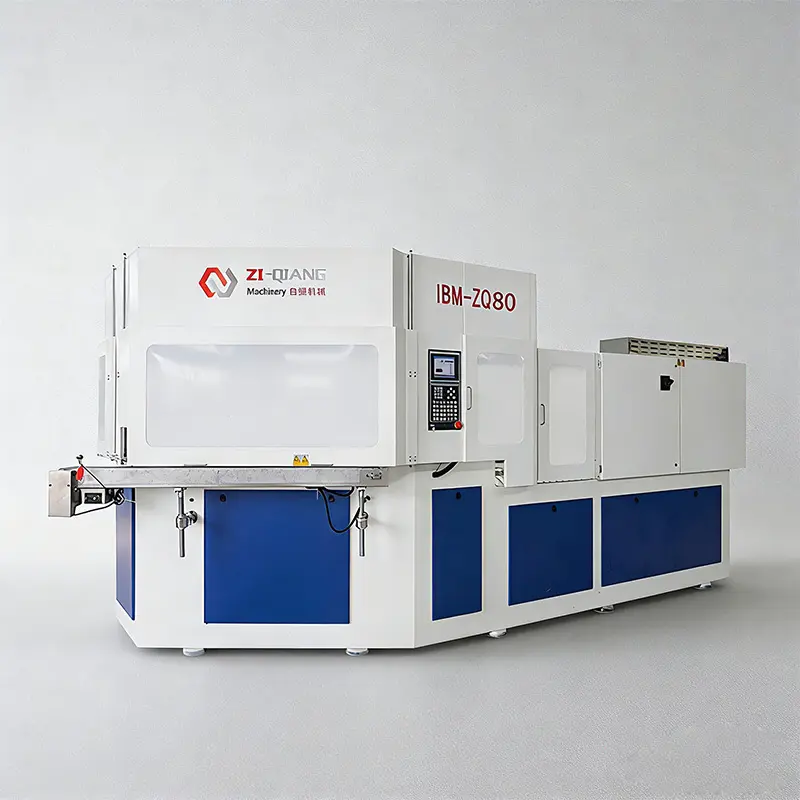
Introduction
Pharmaceutical packaging has one requirement that overrides everything else: consistency. A bottle that varies in wall thickness, neck finish, or clarity from one production run to the next can compromise dosing accuracy, seal integrity, or shelf life. This is why pharmaceutical manufacturers and packaging converters around the world rely on the injection blow molding machine rather than general-purpose blow molding equipment.An injection blow molding machine produces small, high-precision bottles — such as eye drop containers, syrup bottles, and tablet packaging — in a single, tightly controlled process. Unlike extrusion blow molding, it leaves no flash, requires no trimming, and delivers a finished neck that meets tight dimensional tolerances every time.
This guide explains how injection blow molding machines work, why they suit pharmaceutical bottle production specifically, what to check in the specifications before buying, and how to evaluate a Chinese manufacturer like Ziqiang as a long-term supply partner. It's written for procurement managers, OEM buyers, and packaging engineers who are comparing suppliers and preparing a purchasing decision.
What Is an Injection Blow Molding Machine?
An injection blow molding (IBM) machine combines injection molding and blow molding into one continuous cycle. The process runs in three stages:1. Injection – Molten plastic resin is injected around a core rod to form a preform, complete with a fully finished neck and thread.
2. Blowing – The core rod carrying the hot preform rotates to a blow station, where compressed air expands the preform inside a bottle-shaped cavity.
3. Ejection – The finished bottle cools and is ejected, ready for filling with no secondary trimming needed.
Because the neck is injection molded rather than blown, it comes out dimensionally accurate and free of parting lines — a detail that matters when the bottle needs to seal against a dropper cap, pump, or child-resistant closure.
This process is sometimes written as injection blow moulding machine, blow injection molding machine, or simply IBM machine — all referring to the same technology.
How Injection Blow Molding Machines Work for Pharmaceutical Bottles
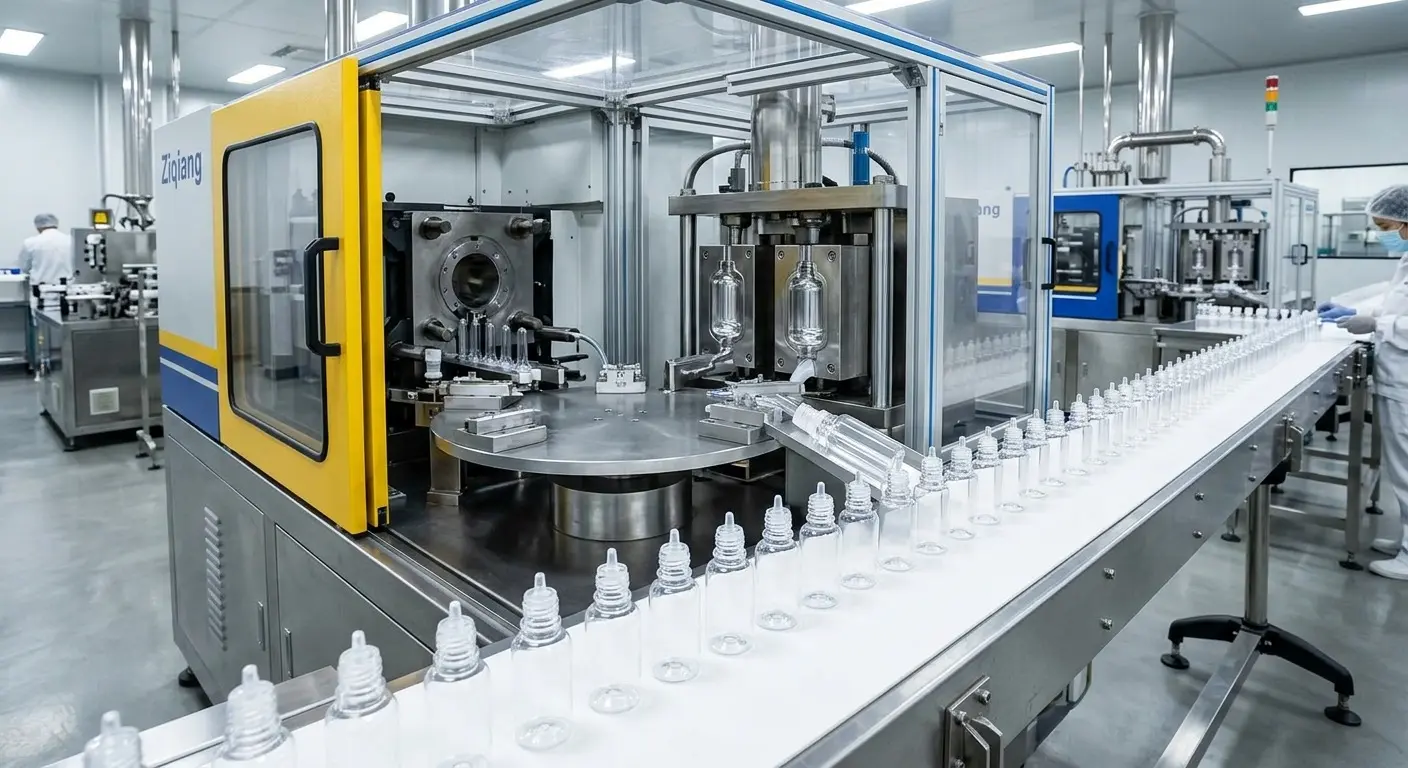
Pharmaceutical bottle production adds extra demands on top of the standard IBM cycle:
• Tight wall-thickness control — critical for bottles holding liquid medication, where uneven walls can affect dosing volume.
• Clean, particle-free production — resin handling and mold design need to minimize contamination risk.
• Small-cavity precision molds — many pharmaceutical containers (2 ml to 250 ml) require multi-cavity molds with very fine tolerances.
• Repeatable cycle times — consistency across a production run of hundreds of thousands of bottles is often more important than raw speed.
A machine built for general packaging (bottled beverages, household chemicals) is not automatically suited to pharmaceutical output. Buyers sourcing for this application should confirm the machine has been configured — clamping force, mold temperature control, and screw design — specifically for small, thin-wall pharmaceutical containers.
Why Pharmaceutical Companies Choose Injection Blow Molding Over Extrusion Blow Molding
Both injection blow molding and extrusion blow molding produce plastic bottles, but they serve different needs.| Factor | Injection Blow Molding | Extrusion Blow Molding |
| Neck finish | Injection molded, high precision | Blown, less precise |
| Flash / trimming | None | Requires trimming |
| Best bottle size | Small (2 ml–500 ml) | Small to large (including handles) |
| Wall thickness control | Very consistent | Moderate |
| Typical pharma use | Eye drops, syrups, tablet bottles | Larger containers, non-precision packaging |
| Material waste | Low | Higher (flash removal) |
Injection Blow Molding Machine Models for Small Pharma Bottles (ZQ40–ZQ135)
Ziqiang's IBM machine range is built around clamping tonnage and cavity count, which determines the bottle size and output volume a buyer can achieve. As a general guide:• ZQ40 – Smaller tonnage, suited to compact bottle runs and lower-volume production or trial orders.
• ZQ60 – Mid-range tonnage for standard pharmaceutical and cosmetic bottle sizes.
• ZQ80 – Increased cavity capacity for higher-output runs.
• ZQ110 – Larger clamping force, suited to bigger multi-cavity molds.
• ZQ135 – Highest tonnage in the range, for buyers running large multi-cavity molds at volume.
The right model depends on your bottle size, cavity count, resin type, and target daily output. Buyers should share their bottle drawing or sample with the supplier before selecting a model — tonnage and mold cavity layout are calculated together, not chosen independently.
All-Electric vs Servo vs Hydraulic Injection Blow Molding Machines: Which Is Best for Pharma?
Ziqiang offers all-electric, servo, and hydraulic drive options. Each has trade-offs worth understanding before you request a quotation.• All-electric machines offer the highest repeatability and the lowest energy consumption. They suit buyers prioritizing precision and cleanroom-adjacent production, where oil contamination risk must be minimized.
• Servo-hydraulic machines combine energy savings with the higher clamping force of hydraulic systems, offering a middle ground between cost and precision.
• Full hydraulic machines are generally the most cost-effective upfront and remain a reliable choice for buyers whose primary concern is tonnage and output rather than energy efficiency.
For pharmaceutical bottles specifically, all-electric and servo options are usually preferred because they reduce contamination risk and improve shot-to-shot consistency — both important when a regulatory audit or quality inspection reviews your packaging supply chain.
Key Features of Ziqiang's Pharmaceutical Bottle Molding Machines
• Horizontal machine layout for stable operation and easier mold changeover• Precision core-rod indexing for consistent neck alignment
• Compatible with multi-cavity molds for small-volume pharmaceutical containers
• Available in all-electric, servo, and hydraulic drive configurations
• Supports common pharmaceutical resins including PE and PP
• Designed for continuous, high-repeatability production runs
Buyers should always request the full technical datasheet and, where possible, a sample bottle produced on the specific machine model under consideration before placing an order.
Materials Used in Injection Blow Molding for Pharmaceutical Packaging
Material choice affects clarity, chemical resistance, and regulatory suitability. Common resins used in pharmaceutical injection blow molding include:• Polyethylene (PE) – widely used for syrup and liquid medication bottles due to chemical resistance.
• Polypropylene (PP) – common for tablet and capsule containers, offering good heat resistance for sterilization.
• Polyethylene Terephthalate (PET) – used where clarity is a priority, though less common in pure injection blow molding than in injection stretch blow molding.
Resin grade matters as much as resin type. Pharmaceutical-grade resins typically come with supplier documentation confirming compliance with relevant food or drug-contact regulations in your target market. Buyers should request this documentation from their resin supplier — a machine manufacturer supplies the equipment, not the regulatory certification for the resin itself.
Injection Blow Molding Machine Specifications for Eye Drop & Small-Volume Bottles
Small-volume pharmaceutical bottles — eye drop containers in particular — need multi-cavity molds with fine tolerances. When reviewing specifications, buyers should pay attention to:• Cavity count — more cavities increase output per cycle but require higher clamping precision.
• Clamping force — must match the mold size and cavity layout, not just the bottle volume.
• Cycle time — always ask for cycle time on your specific bottle design, not a generic figure.
• Shot weight range — confirms the machine can handle your smallest and largest bottle sizes.
• Mold temperature control — affects wall consistency, especially important for thin-wall containers.
A machine spec sheet without cycle time, shot weight range, and cavity compatibility for your bottle is incomplete — ask your supplier for these figures against your actual product drawing.
GMP, Cleanroom & Quality Standards for Pharmaceutical Bottle Production
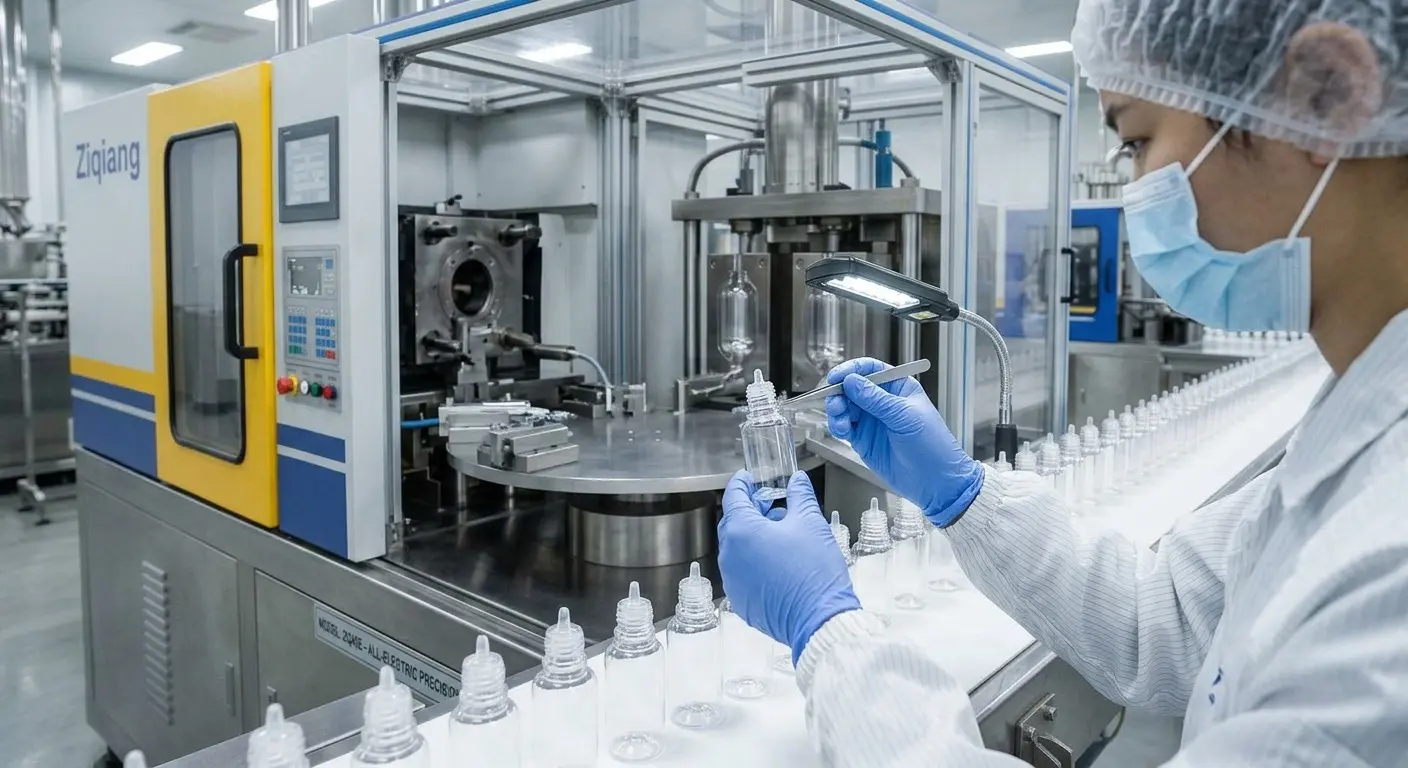
Pharmaceutical bottle buyers commonly operate under GMP (Good Manufacturing Practice) or similar quality frameworks, and packaging equipment needs to support that environment rather than undermine it. When evaluating a machine for this purpose, ask your supplier directly about:
• Materials used in the barrel and screw, and their compatibility with pharmaceutical-grade resins
• Whether the machine design minimizes oil-contact zones near the mold area
• Cleanroom compatibility of the machine's footprint and enclosure
• Documentation the manufacturer can provide to support your own internal quality audits
Machine manufacturers are not a substitute for your own pharmaceutical quality certification process, but the right equipment design makes that certification process easier. If cleanroom compatibility or specific documentation is required, confirm it in writing with the supplier before ordering — do not assume it is included by default.
Injection Blow Molding vs Injection Stretch Blow Molding: What's the Difference?
These two processes are often confused because both start with an injected preform.• Injection blow molding blows the bottle directly from the hot preform in one continuous cycle. It's faster to set up and well suited to smaller, simpler bottle shapes.
• Injection stretch blow molding stretches the preform mechanically before blowing, producing thinner, clearer walls — often used for PET bottles requiring higher clarity and better barrier properties.
For opaque or semi-clear pharmaceutical containers in PE or PP, standard injection blow molding is usually sufficient. For bottles requiring PET-level clarity, injection stretch blow molding is worth evaluating instead.
Advantages of Injection Blow Molding Machines for Pharmaceutical Bottle Manufacturing
• No flash or trim waste, reducing material cost per bottle• Precise, injection-molded neck finish for reliable cap and dropper sealing
• Strong repeatability across long production runs
• Suitable for small-batch trial runs and high-volume production alike
• Lower scrap rate compared to processes requiring secondary trimming
Custom Mold Design & OEM/ODM Support for Pharmaceutical Bottles
Most pharmaceutical bottle buyers need a bottle shape, neck finish, or cavity count that doesn't exist off the shelf. Working with a manufacturer that offers in-house mold design and OEM/ODM support shortens the path from bottle drawing to finished sample. When discussing a custom mold project, be ready to provide:• Bottle drawing or 3D model, including neck finish specification
• Target bottle volume and wall thickness requirements
• Expected daily or monthly output volume
• Resin type you intend to use
Sharing this information upfront allows the supplier to recommend the correct machine tonnage, cavity count, and mold layout together, rather than as separate decisions.
Injection Blow Molding Machine Price: What Affects the Cost?
Machine price varies significantly based on several factors, and buyers comparing quotations should look beyond the headline number:• Drive type — all-electric and servo machines typically cost more upfront than hydraulic models but can offer long-term energy savings.
• Clamping tonnage and cavity count — higher tonnage and multi-cavity setups increase cost.
• Mold cost — often quoted separately from the machine and varies with cavity complexity.
• Automation level — added automation (robotic take-off, inline inspection) increases cost but can reduce labor dependency.
• After-sales support and spare parts availability — factor this into total cost of ownership, not just the purchase price.
Always request a like-for-like quotation: same tonnage, same drive type, same automation level, and mold cost quoted separately. This is the only way to compare pricing between suppliers fairly.
How to Choose the Right Injection Blow Molding Machine for Your Pharma Bottle Line
• Start with your bottle, not the machine. Share your bottle drawing, volume, and neck finish first.• Confirm resin compatibility. Make sure the machine and mold are configured for your chosen resin.
• Decide on drive type based on your priority — precision and energy savings (electric/servo) versus lower upfront cost (hydraulic).
• Request cycle time and output data specific to your bottle, not generic brochure figures.
• Ask about mold lead time separately from machine lead time — custom molds often take longer than the machine itself.
• Check export and after-sales support — spare parts availability and technical support matter once the machine is running in your facility.
• Request a sample bottle produced on the actual machine model before finalizing your order.
Frequently Asked Questions About Injection Blow Molding Machines for Pharmaceutical Bottles
1. What bottle sizes can an injection blow molding machine produce? Injection blow molding machines are typically used for small bottles, generally ranging from about 2 ml up to 500 ml, which covers most pharmaceutical, eye drop, and small cosmetic bottle applications.2. Is injection blow molding suitable for PET bottles? Standard injection blow molding can process PET, but for high-clarity PET bottles requiring thinner walls, injection stretch blow molding is usually the better process.
3. What is the difference between a full-electric and hydraulic injection blow molding machine? Full-electric machines offer higher precision, lower energy use, and reduced oil-contamination risk. Hydraulic machines typically have a lower upfront cost and remain a reliable option where energy efficiency is a lower priority.
4. Can the machine be customized for a specific bottle shape or neck finish? Yes. Custom mold design is common in this industry. Buyers should provide a bottle drawing, volume, and neck finish specification so the supplier can design a compatible mold and confirm machine tonnage.
5. How long does it take to get a custom mold and machine ready for production? Lead time depends on mold complexity and cavity count. Machine lead time and mold lead time are often different, so ask your supplier for both figures separately when planning your production schedule.
6. Does Ziqiang provide export support for international buyers? Yes, Ziqiang supplies buyers across multiple regions and can support export documentation, shipping coordination, and after-sales technical assistance. Contact the team directly for details specific to your country.
Conclusion
Choosing an injection blow molding machine for pharmaceutical bottle production comes down to matching your bottle specification — size, resin, neck finish, and output volume — to the right tonnage, cavity layout, and drive type. Getting this match right at the sourcing stage avoids costly rework later, whether that's an underpowered machine, an incompatible mold, or a drive type that doesn't fit your quality requirements.Ziqiang designs and manufactures injection blow molding machines in all-electric, servo, and hydraulic configurations, with in-house mold design support for custom pharmaceutical, cosmetic, and small-bottle projects. If you're evaluating suppliers for an upcoming bottle line, contact Ziqiang with your bottle drawing and target output — the team can recommend a suitable machine model, provide a detailed quotation, and discuss samples or technical support for your project.