





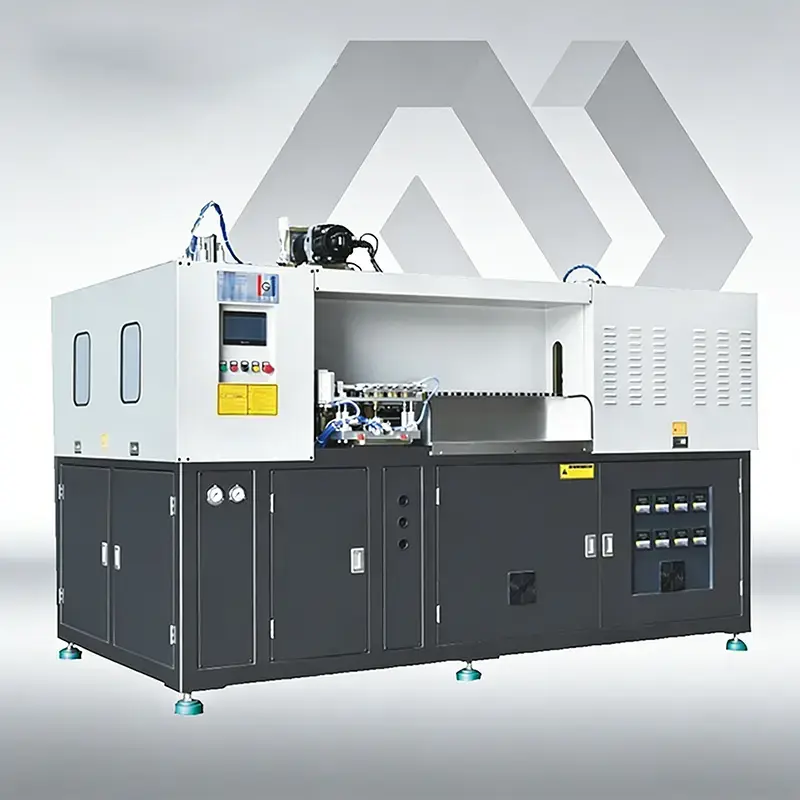
This guide explains how injection, extrusion, and full-electric blow moulding machines differ, which industries each type serves, and what international buyers should check before placing an order. Whether you need a compact unit for pharmaceutical vials or a larger system for HDPE containers, understanding these fundamentals helps you compare suppliers accurately and avoid a costly mismatch between your production goals and the machine you buy.
What Is a Blow Moulding Machine, and Why Source One From China?
A blow moulding machine forms hollow plastic parts, such as bottles, jars, and containers, by heating raw plastic resin and shaping it inside a mould using air pressure. The two main production methods are injection blow moulding and extrusion blow moulding, and each suits different bottle shapes, volumes, and materials.China's plastic machinery industry has built up two decades of manufacturing depth around this equipment. Clusters in Jiangsu and Zhejiang provinces house component suppliers, mould makers, and assembly factories within short distances of each other, which shortens lead times and keeps production costs competitive. This is why so many importers, OEM/ODM buyers, and packaging brand owners across North America, Europe, the Middle East, and Southeast Asia now work directly with a Chinese blow moulding machine manufacturer rather than buying through regional distributors.
Buying direct also removes several layers of markup that come with trading companies. When you work with the factory itself, your technical questions go straight to the engineers who designed the machine, and any custom mould request goes straight to the team that will cut it. For procurement managers who need clear answers on lead time, voltage configuration, or spare-parts stock before approving a purchase order, this direct line of communication is often more valuable than a slightly lower quoted price.
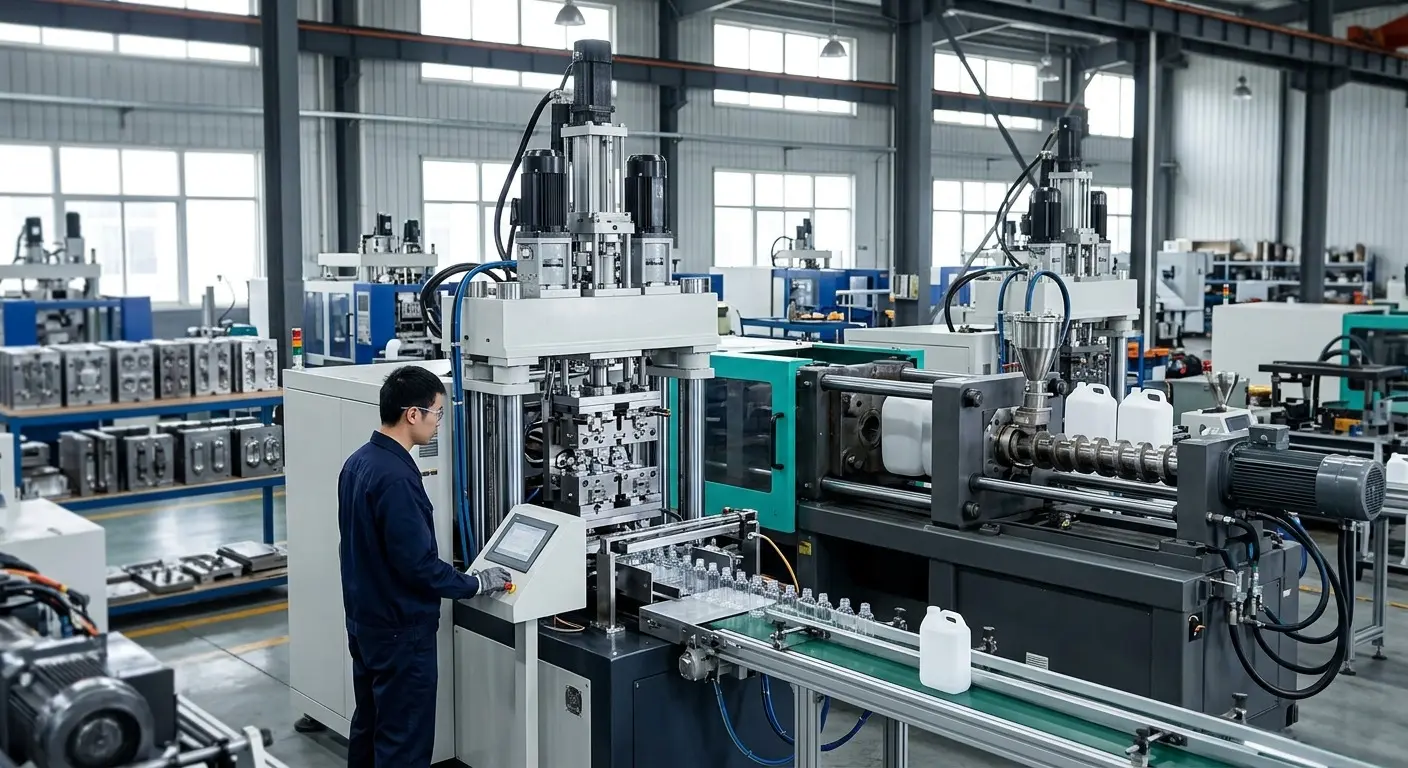
Types of Blow Moulding Machines: IBM, EBM & ISBM Explained
Not every blow moulding machine works the same way. Choosing the right process depends on your bottle design, wall thickness requirements, and production volume.Injection Blow Moulding (IBM) Machines
An Injection Blow Molding Machine produces small, high-precision containers in one continuous cycle, from preform injection to final blowing. This process suits pharmaceutical bottles, eye drop containers, and cosmetic packaging that need tight neck-thread tolerances and no flash or seam lines. Typical output ranges from 1ml to 1000ml.Extrusion Blow Moulding (EBM) Machines
An Extrusion Blow Moulding Machine extrudes a plastic parison and inflates it inside a split mould. This method is common for larger containers such as household chemical bottles, lubricant containers, and jugs, including double station blow moulding machine setups that run two moulds at once to increase output. Buyers comparing an extruder blow moulding machine against an IBM unit should weigh bottle size against precision needs, since EBM machines handle bigger volumes but leave a pinch-off seam at the base.Injection Stretch Blow Moulding (ISBM) Machines
An Injection Stretch Blow Moulding Machine stretches heated preforms both axially and radially before blowing, producing the clear, rigid, and lightweight bottles typically used for beverages, water, and PET packaging. A fully automatic PET stretch blow moulding machine is the standard choice for buyers who need high clarity and strong burst resistance in the finished bottle.Full-Electric, Servo & Hydraulic Drive Systems: Which One Fits Your Line?
Drive type affects energy consumption, cycle speed, and precision, so it is worth understanding before requesting a quotation.• Hydraulic drive: lower upfront cost, proven reliability, suited to buyers running fewer shifts per day.
• Servo-hydraulic drive: combines hydraulic power with servo motor control, cutting energy use while keeping strong clamping force.
• Full-electric drive: the quietest and most energy-efficient option, favoured by pharmaceutical and cosmetic manufacturers that need contamination-free, climate-controlled environments.
A fully automatic blow moulding machine with a full-electric or servo drive typically costs more upfront than a hydraulic model, but the difference is usually recovered through lower electricity bills within one to three years of continuous operation, depending on your shift pattern and local energy rates.
Applications: Pharmaceutical, Cosmetic, Food & Household Packaging
Bottle-forming requirements vary sharply between industries, and a good manufacturer will recommend a machine configuration based on your end product, not a generic catalogue model.• Pharmaceutical packaging: eye drop bottles, syrup bottles, and tablet containers need tight neck-thread tolerances and clean-room compatible full-electric machines.
• Cosmetic packaging: lotion bottles, cream jars, and serum containers benefit from precise wall-thickness control for a premium look and feel.
• Food and household packaging: sauce bottles, cleaning-product containers, and larger jugs often run on extrusion blow moulding lines for cost efficiency at scale.
If you are unsure which category your product falls into, reviewing real production examples by industry is a useful starting point before requesting a quotation.
Customization and OEM/ODM Support for International Brands
Most overseas buyers need more than a standard machine off the shelf. A capable fully automatic blow moulding machine manufacturer should be able to support the following without treating it as an afterthought:• Custom mould design and fabrication, working with an in-house blow moulding die maker team rather than outsourcing tooling to a third party.
• Bottle capacity and neck-finish adjustments to match your existing caps, pumps, or sprayers.
• Multi-cavity mould configurations to raise output per cycle for high-volume orders.
• Auxiliary equipment such as mould temperature controllers, leak detectors, and conveyors, supplied as a matched set rather than mixed brands.
This kind of OEM/ODM cooperation matters most for brand owners and project contractors who are scaling a specific bottle design rather than buying generic equipment.
Blow Moulding Machine Comparison: Choosing the Right Model
The table below compares typical machine classes by production focus. Use it as a starting point in conversations with your supplier, since exact specifications should always be confirmed against your bottle drawing.| Machine Class | Drive Options | Best Suited For | Typical Volume Range |
| Compact IBM (e.g. ZQ40) | Hydraulic / Servo | Small-batch pharma & cosmetic bottles | 1ml – 120ml |
| Mid-range IBM (e.g. ZQ60 / ZQ80) | Servo-hydraulic | Cosmetic & pharmaceutical bottles, higher output | 50ml – 500ml |
| Multi-cavity IBM (e.g. ZQ110) | Servo-hydraulic | Multi-cavity mould production, larger orders | Up to 1000ml |
| Full-electric IBM (e.g. ZQ135HE) | Full-electric | Clean, low-energy production for sensitive products | Small to mid volume |
| Extrusion Blow Moulding (EBM) | Hydraulic / Servo, single or double station | Household, food & industrial containers | Large containers & jugs |
How to Evaluate a Blow Moulding Machine Supplier in China
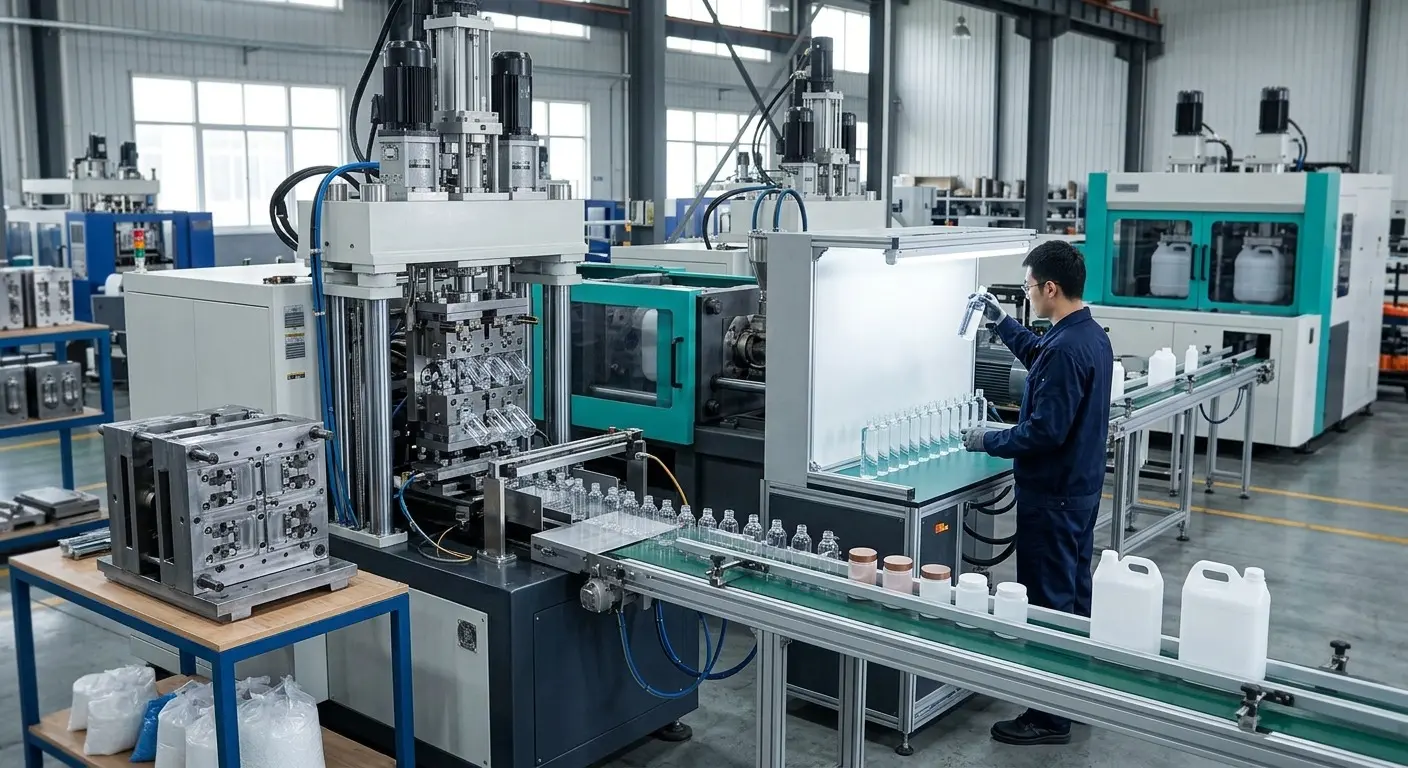
Whether you found a blow moulding machine for sale through a trade show, a directory listing, or a search engine, the same due-diligence checklist applies before you commit to an order.
• Manufacturing capability: confirm the supplier machines and assembles equipment in its own facility rather than reselling under its brand name.
• Quality control process: ask how components, welds, and electrical wiring are inspected before shipment, and whether test-run videos are provided.
• Certification: check for CE certification if you plan to import into the European Union or other markets that require it.
• Spare parts availability: confirm lead times for extrusion blow moulding machine parts and other wear components after installation.
• Pricing transparency: a supplier should explain what affects fully automatic blow moulding machine price quotes, such as drive type, mould cavities, and automation level, instead of giving a single flat number with no breakdown.
• Export experience: ask which countries the supplier currently ships to and how it handles customs documentation, crating, and machine manuals in your language.
• After-sales support: clarify installation guidance, training, and warranty terms before signing a contract, not after the machine arrives.
Export Support: What to Expect When Importing From China
Buying a machine is one step; getting it installed and running smoothly in another country is the part that separates a good supplier from a difficult one. Before you place a deposit, ask your supplier to confirm the following in writing:• Shipping and crating: wooden export crating, container loading photos, and a realistic transit estimate for sea freight to your port.
• Customs documentation: commercial invoice, packing list, certificate of origin, and any certification documents your country requires for machinery imports.
• Voltage and utility matching: confirmation that the machine is configured for your local voltage, frequency, and compressed-air supply before it leaves the factory.
• Installation guidance: a step-by-step manual in your working language, supported by video calls or, for larger orders, an engineer sent on site.
• Training: operator and maintenance training so your team can run the machine independently once installation is complete.
Buyers in regions such as the Middle East, South America, and Southeast Asia often deal with longer shipping routes and stricter import procedures, so confirming these details early prevents delays once the machine reaches port.
Frequently Asked Questions
1. What is the difference between injection blow moulding and extrusion blow moulding machines?
Injection blow moulding produces small, precise containers with no seam line and works well for pharmaceutical and cosmetic bottles. Extrusion blow moulding suits larger containers and is generally more cost-effective for bigger volumes, though it leaves a pinch-off seam at the base of the bottle.2. How much does a fully automatic blow moulding machine cost?
Price depends on drive type, mould cavities, automation level, and machine size. Hydraulic machines cost less upfront, while full-electric and servo models cost more initially but reduce electricity use over the machine's lifetime. Request a written quotation broken down by these factors so you can compare suppliers fairly.3. Can I get a custom blow mould made for my bottle design?
Yes. Most established Chinese manufacturers operate an in-house mould-making team, so you can submit a bottle drawing or physical sample and receive a matched mould alongside your machine, rather than sourcing tooling separately.4. Do Chinese blow moulding machine manufacturers offer OEM/ODM support?
Many do, particularly for brand owners and project contractors who need a specific bottle capacity, neck finish, or multi-cavity configuration. Confirm this capability and ask for examples of past customization work during your supplier evaluation.5. What bottle materials can these machines process?
Common materials include HDPE, LDPE, PP, PS, ABS, PETG, and PET, depending on the machine type. IBM and EBM machines typically run HDPE, LDPE, and PP, while ISBM machines are built specifically for PET bottle production.6. How long does delivery and installation take for export orders?
Lead times vary by machine size and current factory workload, and installation timelines depend on whether you need on-site support or remote guidance. Ask your supplier for a written production and shipping schedule before placing a deposit, and confirm who is responsible for freight, insurance, and customs clearance on your side.7. Is a Chinese-made blow moulding machine reliable for long-term production?
Reliability depends more on the individual manufacturer's build quality and component sourcing than on the country of origin. Ask about the brands used for critical parts such as motors, PLCs, and hydraulic components, and request references or video evidence of machines running in real production environments before you commit.Conclusion
Choosing the right Chinese blow moulding machine comes down to matching your bottle design, production volume, and budget with the correct machine type and drive system. Injection blow moulding suits small, precise containers, extrusion blow moulding handles larger volumes cost-effectively, and full-electric or servo drives reduce long-term energy costs for sensitive production environments.If you are comparing suppliers for an upcoming project, our team can walk you through machine specifications, mould options, and pricing based on your bottle drawing or sample. Contact us for a detailed quotation, customization options, or technical support, and we will respond with the information you need to move your project forward.