





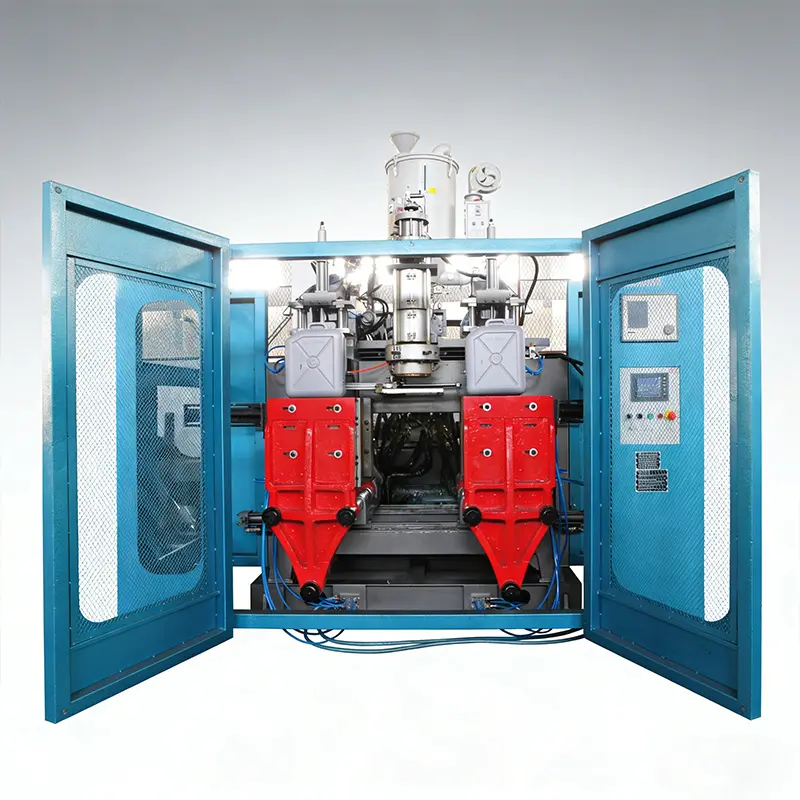
This guide walks through how a fully automatic extrusion blow molding machine works, what separates single station and double station models, which materials and applications they support, and what to check before you place an order with any extrusion blow molding machine manufacturer in China. Whether you are comparing an extrusion blow molding machine for sale for the first time or replacing aging extrusion blow molding equipment, this article gives you the practical details procurement teams and engineers actually need.
ZIQIANG (Zhangjiagang Ziqiang Machinery Co., Ltd.) has produced blow molding equipment for over 20 years and supplies customers across more than 30 countries. Our Extrusion Blow Moulding Machine range includes both single station and double station fully automatic models built for daily chemical, food, pharmaceutical, and industrial packaging production.
What Is a Fully Automatic Extrusion Blow Molding Machine?
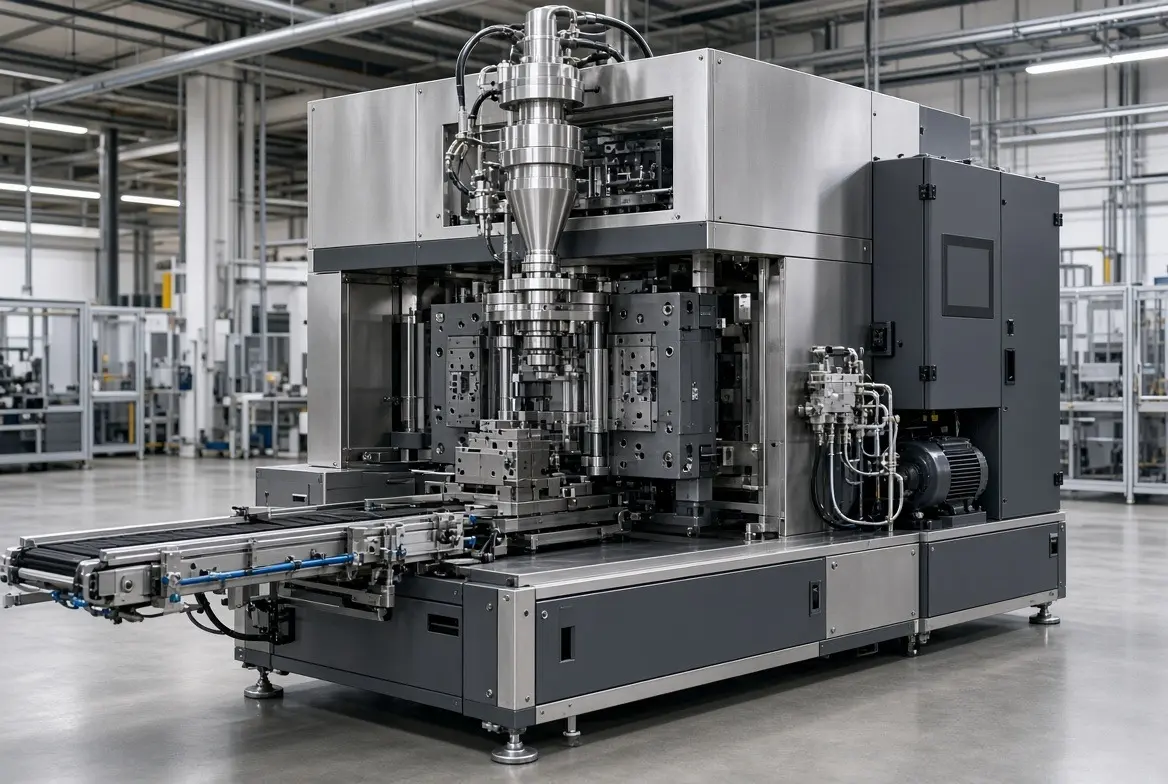
An extrusion blow molding machine (also called an extrusion blow molder or blow molding extruder) is production equipment that melts plastic resin, forms it into a hollow tube called a parison, then uses compressed air to expand that parison inside a mold to create a hollow plastic part — most commonly bottles, jerry cans, drums, and tanks.
A "fully automatic" model means the entire cycle — extrusion, mold clamping, blowing, cooling, and part ejection — runs without an operator manually handling each step. This matters for buyers because it directly affects:
• Labor cost per unit produced
• Output consistency from shift to shift
• Scrap rate and material waste
• Total cost of ownership over the equipment's lifespan
Compared to semi-automatic extrusion blow mold machine setups, fully automatic lines are the standard choice for buyers running continuous production rather than short trial batches.
How Does an Extrusion Blow Molding Machine Work?
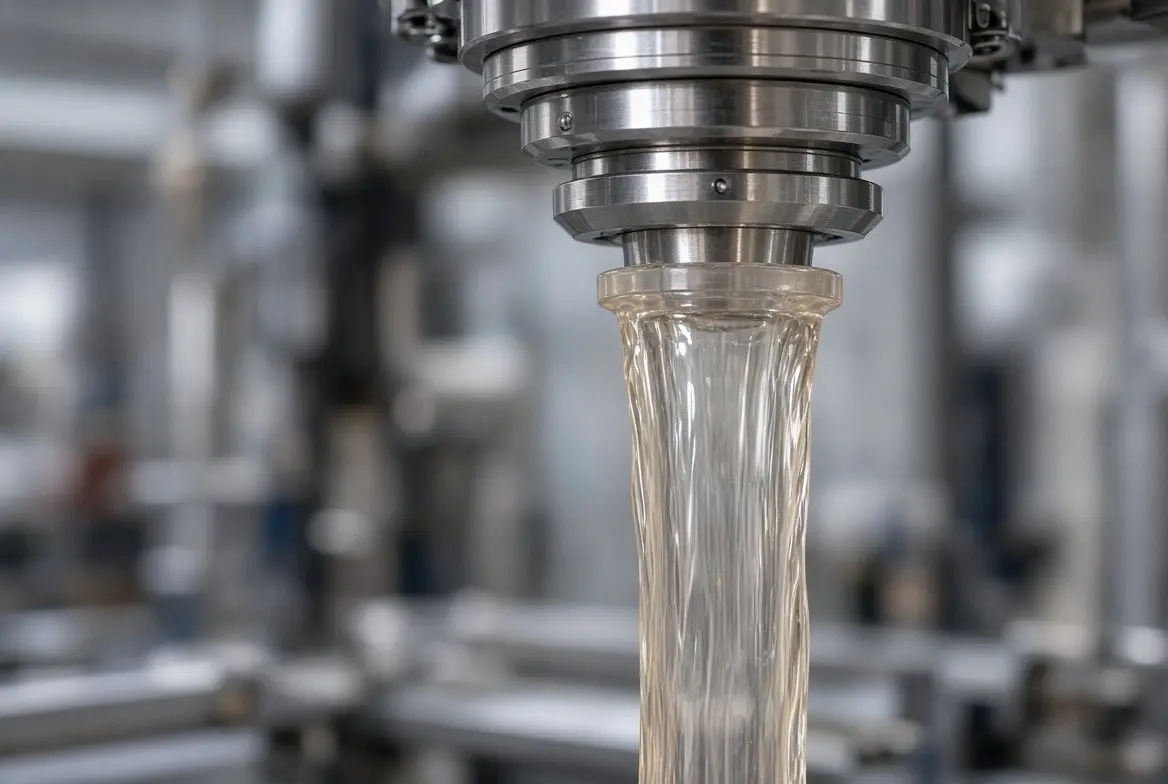
The extrusion blow molding (EBM) machine process follows four main stages:1. Extrusion – Plastic pellets (commonly HDPE, PP, or PVC) are melted and pushed through an extrusion head to form a soft, hollow tube (the parison).
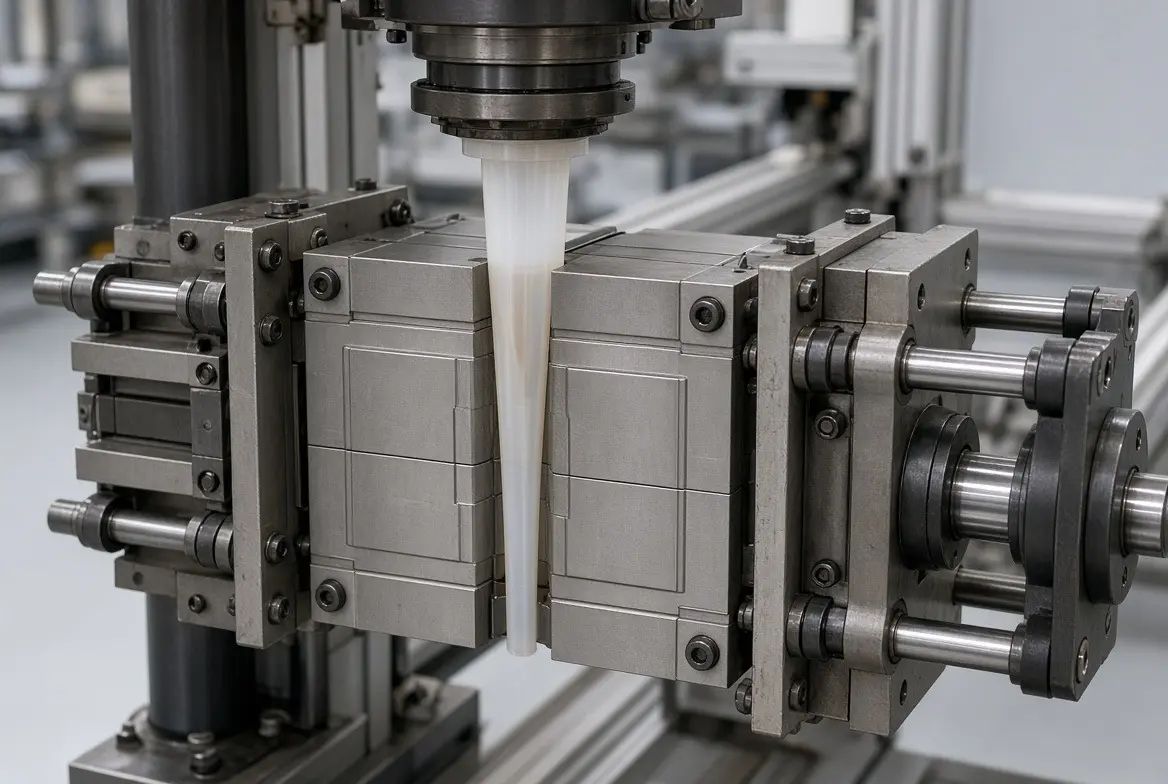
2. Mold Clamping – The mold closes around the parison, sealing it in the shape of the final product.
3. Blowing – Compressed air is injected into the parison, pressing the hot plastic against the mold walls to form the finished shape.
4. Cooling & Ejection – The part cools inside the mold, the mold opens, and the finished product is ejected — often directly onto a conveyor for trimming or packing.
The design of the extrusion head has a major effect on wall-thickness control. Machines with programmable wall-thickness control (parison programming) reduce material use by putting more plastic where the part needs strength and less where it doesn't — an important detail to ask about when comparing quotes from different suppliers.
Key Features of Our Fully Automatic Extrusion Blow Molding Machine
Buyers comparing extrusion blow molding machines from different factories should look past the headline price and check the features that affect real-world performance:• Hydraulic clamping system for stable mold closing force and longer mold life
• PLC touch-screen control for one-click startup, recipe storage, and real-time monitoring
• Programmable parison wall-thickness control to reduce material consumption
• Servo-driven extrusion motor (available on select models) to lower energy use
• Quick mold-change design to reduce downtime between product changeovers
• Safety interlocks and alarm systems on the clamping and blowing units
These features apply across our single and double station lines, though the exact configuration depends on the machine size and the buyer's production goals.
Technical Specifications & Machine Models
Below is a general specification comparison to help you shortlist the right size of machine for your output target. Exact figures vary by model — request a formal datasheet for the machine you are considering.| Specification | Single Station Model | Double Station Model |
| Typical output | Lower to medium volume | Higher volume, two molds per cycle |
| Best for | Small daily chemical bottles, cosmetic bottles, sample runs | Medium-to-large batch production |
| Floor space required | Smaller footprint | Larger footprint |
| Clamping force range | Lower to medium tonnage | Medium to high tonnage |
| Mold flexibility | Single mold cavity setup | Two independent mold stations |
| Typical buyers | Startups, small brand owners, trial production | Established manufacturers, contract packagers |
We manufacture both configurations, including the Fully Automatic EBM (single station) series and the Fully Automatic EBM (double station) series, each available in multiple clamping tonnages and shot sizes.
Single Station vs. Double Station Extrusion Blow Molding Machines
This is one of the most common questions buyers ask before requesting a quotation.Choose a single station machine if:
• You are producing small-to-medium volumes• Floor space is limited
• You need flexibility to switch between different bottle sizes often
• You are testing a new product before scaling production
Choose a double station machine if:
• You need to double output without doubling floor space per unit• Your production plan is stable and high-volume
• You want to run two molds at once to improve line efficiency
There is also the rotary extrusion blow molding machine category for very high-output operations, and multilayer extrusion blow molding machine setups for buyers who need barrier layers (for chemical resistance or UV protection) in the finished bottle wall. Let us know your target output and bottle design, and we can recommend the configuration that fits.
Applications: Bottles, Drums, Tanks & Containers We Can Produce
Extrusion blow molding products cover a wide range of container types, including:• Household chemical and detergent bottles
• Personal care and cosmetic bottles
• Food-grade bottles and jars
• Pharmaceutical and medical packaging (subject to material and cleanroom requirements)
• Industrial drums, jerry cans, and tanks
• Automotive fluid reservoirs and ducting components
Buyers in agriculture, chemical distribution, food and beverage, and personal care industries commonly source extrusion blow molding machine equipment for exactly these product lines.
Materials Supported: HDPE, PP, PVC & Multi-Layer Options
Material compatibility is one of the first things to confirm with any supplier before ordering. Our machines are designed to process:• HDPE (High-Density Polyethylene) – the most common material for bottles, drums, and jerry cans
• PP (Polypropylene) – used for products needing higher heat resistance
• PVC – used in specific industrial and construction applications
• Multi-layer combinations – for products requiring a barrier layer against oxygen, moisture, or chemical permeation
If your product needs a specific resin grade or a multilayer structure, share your resin data sheet with our engineering team so we can confirm the right screw and die-head configuration for your plastic extrusion blow molding project.
Why Choose a Fully Automatic Model Over Semi-Automatic?
Some buyers, especially those with lower production volumes, ask whether a semi-automatic machine is a better starting point. In most cases, a fully automatic extrusion blow molding machine is the better long-term investment because:• It reduces dependency on skilled machine operators
• It produces more consistent wall thickness and part weight
• It lowers labor cost per unit as volume grows
• It reduces the risk of human error during the blowing and ejection stages
Semi-automatic machines can still make sense for very low-volume or highly experimental production, but most of our overseas customers moving from sample runs into regular supply contracts choose fully automatic equipment from the start to avoid a second equipment upgrade later.
Advantages of ZIQIANG's Extrusion Blow Molding Technology
ZIQIANG has focused on blow molding equipment — including injection blow molding, extrusion blow molding, and injection stretch blow molding — for more than two decades. On the extrusion side, our machines are built with:• Precision hydraulic and mechanical components for stable, repeatable cycles
• PLC-based control systems that are straightforward to train new operators on
• Configurable mold stations to match your product range
• Engineering support that reviews your bottle design and resin choice before production starts
We do not claim to be the only option in the market — we simply focus on building extrusion blow molding equipment that is easy to operate, easy to maintain, and backed by a manufacturer that responds directly to your technical questions.
Extrusion Blow Molding Machine Price: What Affects the Cost?
Extrusion blow molding machine price varies significantly based on several factors, and understanding them helps you compare quotations accurately rather than by price alone:• Clamping tonnage and shot size – larger machines cost more but produce bigger or heavier parts
• Single vs. double station configuration – double station machines cost more upfront but increase output per square meter of floor space
• Control system level – PLC touch-screen systems with recipe storage cost more than basic control panels
• Automation add-ons – robotic deflashing, in-line leak testing, or automatic conveyor systems add to the base price
• Mold cost – molds are usually quoted separately and depend on cavity number, bottle shape, and material
• After-sales support terms – warranty length, spare parts availability, and installation support can all affect total cost of ownership
We recommend requesting a detailed quotation that separates machine cost, mold cost, spare parts package, and shipping terms (FOB, CIF, etc.) so you can compare suppliers on equal terms.
Why Choose ZIQIANG as Your China Manufacturer?
When you are sourcing from extrusion blow molding machine manufacturers in China, it helps to work with a factory that can support you before, during, and after the sale. Buyers working with ZIQIANG typically look for:• Direct factory pricing without unnecessary trading-company markups
• Engineering discussion before placing an order, not just after
• Machines built for their specific resin and bottle design
• A manufacturer that can support spare parts and technical questions for years after installation
We work with importers, distributors, OEM/ODM buyers, and project contractors across North America, Europe, the Middle East, Asia-Pacific, South America, and Africa, and we are set up to communicate in the time zones and formats your procurement team needs.
Quality Control, Certifications & Testing Standards
Every machine goes through functional testing before shipment, including mold clamping alignment, parison wall-thickness checks, and cycle-time verification under load. If your project requires specific compliance documentation (such as CE marking or material certificates for food or pharmaceutical contact), share your requirements early in the quotation process so our team can confirm what applies to your specific machine and mold combination. We do not list certifications we cannot verify — please contact our sales team directly for current documentation applicable to your order.
Customization & OEM Support for Your Production Needs
Every bottle project is different, which is why we offer OEM/ODM support rather than a one-size-fits-all machine. Customization options include:• Mold cavity number and layout based on your bottle design
• Clamping tonnage matched to your part size and wall thickness needs
• Control system language and interface adjustments
• Auxiliary equipment integration (grinders, loaders, conveyors) to match your existing production line
Send us your bottle drawing, resin type, and target output, and our engineering team will confirm whether an existing model fits or whether a custom configuration is needed.
Installation, Training & After-Sales Service
Buying an extrusion blow molding machine for sale overseas comes with legitimate concerns about installation and support after the machine arrives. We support customers through:• Installation guidance and commissioning support
• Operator training materials for your production team
• Spare parts identification and ordering support
• Ongoing technical communication for troubleshooting
If you need on-site engineer support, let us know during the quotation stage so it can be planned into your project timeline and budget.
Frequently Asked Questions About Extrusion Blow Molding Machines
1. What products can an extrusion blow molding machine produce?It can produce hollow plastic items such as bottles, jerry cans, drums, tanks, and certain automotive components, typically from HDPE, PP, or PVC resin.
2. What is the difference between single station and double station machines?
A single station machine runs one mold per cycle and suits smaller production volumes, while a double station machine runs two molds per cycle to increase output without doubling floor space.
3. How much does an extrusion blow molding machine cost?
Price depends on clamping tonnage, station configuration, control system level, and automation add-ons. Request an itemized quotation to compare machine cost, mold cost, and shipping terms separately.
4. Can the machine be customized for my specific bottle design?
Yes. Share your bottle drawing, resin type, and target output, and our engineering team will confirm mold and machine specifications for your project.
5. What materials can this equipment process?
Our machines are designed for HDPE, PP, PVC, and multilayer material structures, depending on the model and die-head configuration.
6. Do you provide installation and training support?
Yes. We provide installation guidance, operator training materials, and ongoing technical support after your machine is delivered.
Conclusion
Choosing the right extrusion blow molding machine comes down to matching your output target, bottle design, and budget with a manufacturer that can support the equipment long after it leaves the factory. Whether you need a single station machine for a smaller production line or a double station system for higher volume output, ZIQIANG's engineering team is ready to review your project details and recommend the right configuration.If you are ready to move forward, contact us with your bottle design, target output, and resin type, and we will prepare a detailed quotation, technical specification sheet, and — where applicable — sample references for your review.