





Introduction
Small bottles demand tighter process control than many larger hollow containers. A minor variation in the neck, thread, sealing surface, bottle weight, or wall distribution can lead to leakage, cap-fitting problems, poor dosing, or inconsistent appearance. For pharmaceutical, cosmetic, food, beverage, and personal-care packaging, buyers therefore need more than a general-purpose blow molding machine.An injection blow molding machine combines injection molding and blow molding in one controlled production process. It first forms a precise preform around a core rod, then transfers that preform into a blow mold, where compressed air shapes the finished bottle. This method is particularly suitable for small plastic bottles requiring an accurate neck finish, smooth surface, repeatable dimensions, and limited post-molding trimming.
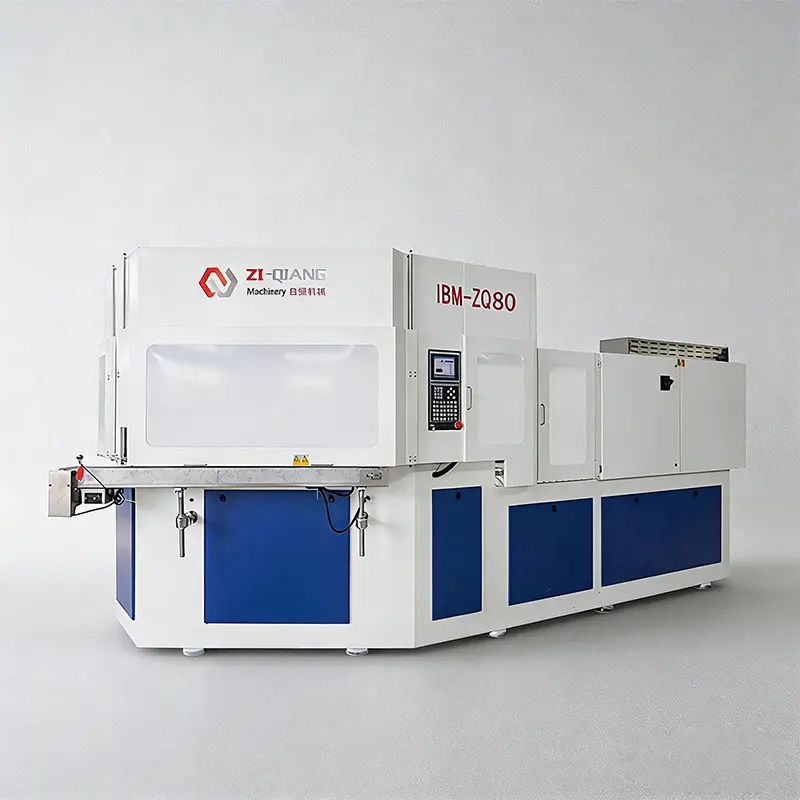
ZIQIANG offers a range of injection blow molding machines for different project sizes. This guide explains the process, suitable materials, machine selection, published model specifications, and the information buyers should prepare before requesting a quotation.
What Is an Injection Blow Molding Machine for Small Bottles?
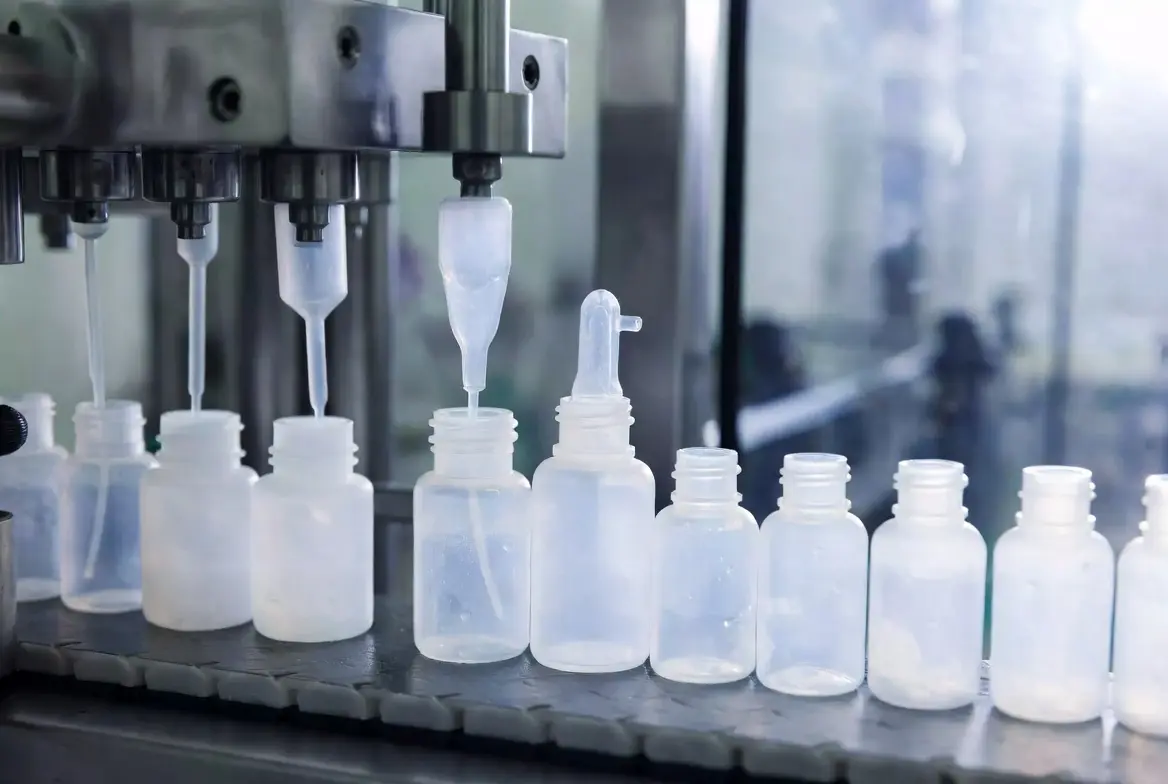
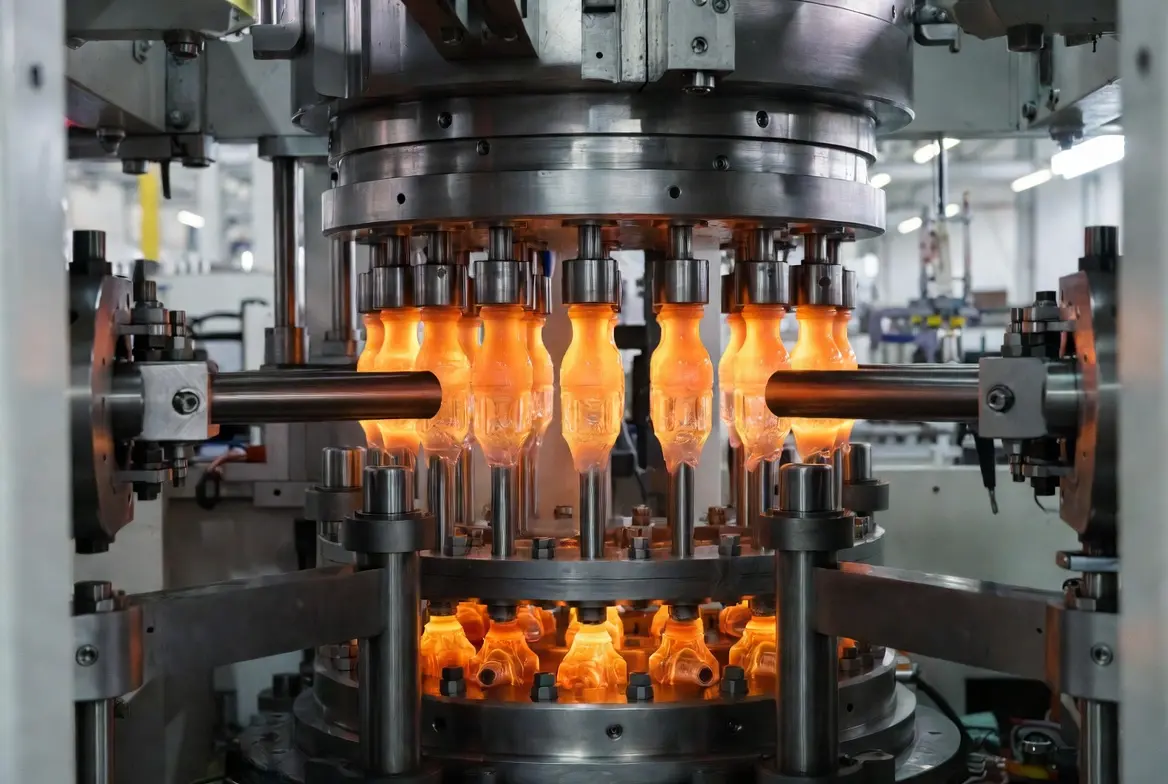
An injection blow moulding machine, often called an IBM machine, produces hollow plastic containers through three connected stages: injection, blowing, and ejection.During injection, molten plastic enters a preform mold around a metal core pin. This creates the bottle neck, thread, and initial material distribution. The machine transfers the hot preform into a blow mold, where compressed air expands it into the finished bottle shape. After cooling, the machine ejects the container.
For small bottles, the process can provide:
• Precise necks for caps, pumps, droppers, and spray closures
• Stable bottle weight and dimensional repeatability
• Smooth surfaces for labels, printing, and premium packaging
• Less trimming than many extrusion blow molding processes
• Efficient multi-cavity production with a properly matched mold
A plastic injection blow molding machine is commonly selected when sealing performance and neck accuracy are more important than producing very large or highly irregular containers.
How Does the Injection Blow Molding Process Work?
1. Plasticizing and Injection
Plastic pellets enter the barrel, where controlled heat and screw movement melt and mix the material. The machine injects the melt into the preform cavity around the core rod.Temperature, pressure, and shot size must remain stable because the preform determines the amount and distribution of material available for the final bottle.
2. Preform Transfer and Blowing
The machine transfers the preform to the blow station. The blow mold closes, and compressed air expands the preform against the internal wall of the mold.Air pressure, mold temperature, cooling time, and core alignment affect bottle wall distribution, surface quality, and dimensional stability.
3. Cooling and Ejection
Once the bottle has cooled enough to retain its shape, the mold opens and the finished product is removed.A stable injection and blow molding process should maintain consistent neck dimensions, bottle weight, appearance, and mechanical performance across long production runs.
Before mass production, buyers should request a mold trial using the intended resin, bottle drawing, closure, and target cycle conditions. This confirms whether the machine, mold, and material work correctly as one production system.
Which Small Bottles Can an Injection Blow Molding Machine Produce?
Injection blow molding machines are widely used for precision packaging, including:• Eye-drop, nasal-spray, oral-liquid, syrup, tablet, and capsule bottles
• Cosmetic serum, lotion, cream, essential-oil, and sample bottles
• Travel-size shampoo, sanitizer, gel, and personal-care containers
• Food-additive, sauce, nutrition, condiment, and sample bottles
• Small laboratory, household chemical, and industrial-liquid containers
The correct machine depends on more than bottle volume. A 10 ml eye-drop bottle and a 100 ml cosmetic bottle may require different cavity layouts, core rods, neck designs, cooling systems, and output calculations.
ZIQIANG’s application guidance associates compact models such as the ZQ40 and ZQ60 with small precision bottles, while larger models support projects needing greater shot capacity or mold area.
International buyers should provide a bottle drawing or sample instead of selecting a machine based only on the stated bottle capacity.
What Plastic Materials Are Suitable for Injection Blow Molding?
Material selection affects flexibility, stiffness, chemical resistance, clarity, sealing behavior, and processing conditions.
HDPE
High-density polyethylene provides stiffness, low weight, and useful chemical resistance. It is commonly used for:• Tablet and capsule containers
• Liquid-medicine bottles
• Personal-care packaging
• Opaque food bottles
• Household and chemical containers
HDPE is often selected when buyers require a rigid bottle with good impact and chemical-resistance properties.
LDPE
Low-density polyethylene is softer and more squeezable. It suits dropper bottles, dispensing containers, and packaging that requires controlled flexibility.LDPE is frequently evaluated for eye-drop and other squeeze-dispensing applications where the user must compress the bottle by hand.
PP
Polypropylene offers good stiffness and heat resistance. It is used for pharmaceutical, food, cosmetic, and laboratory packaging when the bottle design and filling conditions suit PP.The supplier should test the actual PP grade because different melt-flow values can affect injection stability, bottle appearance, cycle time, and wall distribution.
PET and Other Materials
PET is normally associated with stretch blow molding when high clarity and oriented bottle strength are required.For PET projects, buyers should review ZIQIANG’s injection stretch blow moulding machines instead of assuming that a standard IBM machine is the correct choice.
ZIQIANG’s pharmaceutical selection guide identifies HDPE, PP, and PE as common materials for its ZQ injection blow series and recommends evaluating ISBM technology for PET.
Always provide the exact resin grade. Melt flow, additives, color masterbatch, recycled content, and regulatory requirements can change processing behavior.
Key Features of ZIQIANG Injection Blow Molding Machines
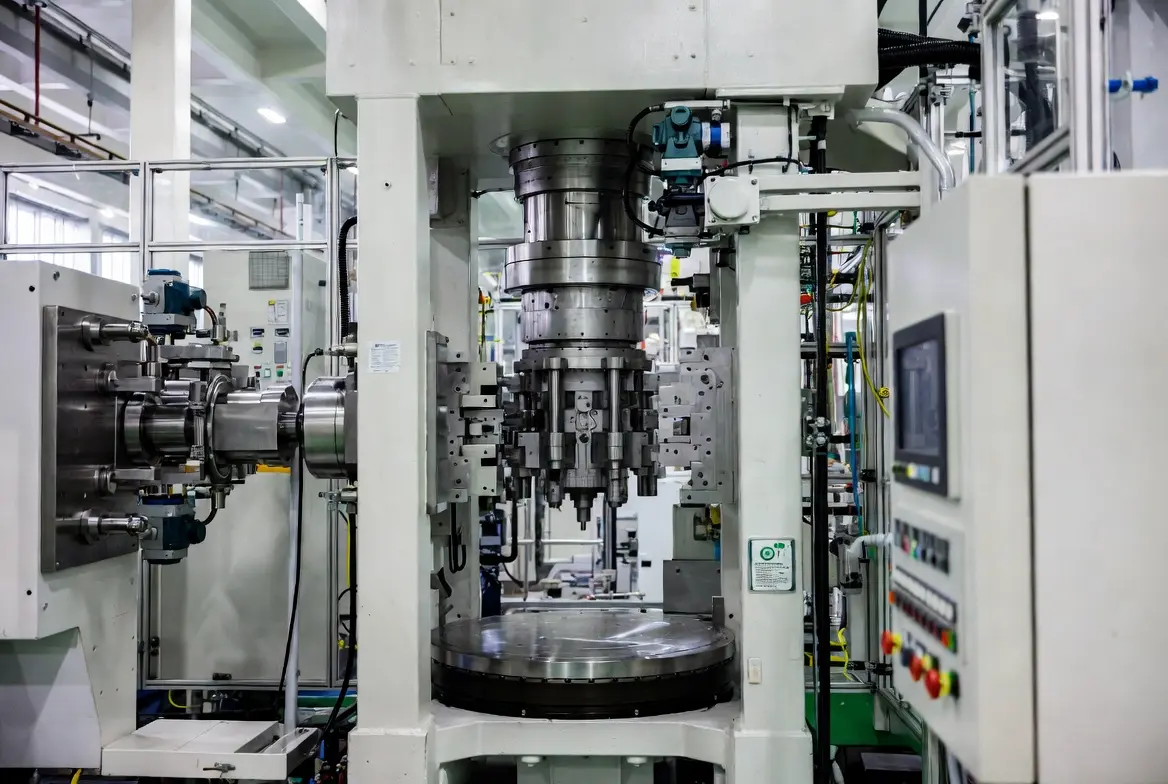
ZIQIANG’s published IBM range includes ZQ40, ZQ60, ZQ80, ZQ110, and ZQ135 models, giving buyers several injection capacities and clamping-force levels.Depending on the selected model and configuration, relevant features may include:
• Servo-controlled rotary movement
• PLC-based machine control and production monitoring
• Hydraulic and fully electric configurations
• Custom molds based on bottle and closure drawings
• Different screw diameters and injection capacities
• Multiple mold-size and clamping-force options
• Integration with conveyors and downstream equipment
• Compatibility with leak testing and visual inspection systems
• Connection to labeling and automatic packing equipment
The fully electric variants published on the ZQ product pages use servo-driven movements and do not require hydraulic oil for machine motion.
This configuration can support cleaner operation, precise movement, lower noise, and reduced maintenance related to hydraulic components.
Buyers should confirm standard equipment, optional components, electrical brands, safety requirements, and automation scope in the final technical agreement.
Injection Blow Molding Machine Specifications and Production Capacity
The following table summarizes selected specifications published for ZIQIANG’s standard ZQ models.Final production output depends on bottle weight, resin, cavity number, cooling conditions, mold design, automation, and the agreed machine configuration.
| Model | Screw Diameter | Published Injection Weight | Injection Clamping Force | Dry Cycle | Total Power |
| ZQ40 | 40/45 mm | 190/260 g | 400 kN | 3.5 s | 20 kW |
| ZQ60 | 45/50 mm | 260/383 g | 600 kN | 4 s | 37 kW |
| ZQ80 | 55 mm | 466 g | 800 kN | 4 s | 55 kW |
| ZQ110 | 65 mm | 540 g | 1,100 kN | 4 s | 80 kW |
| ZQ135 | 70 mm | 650 g | 1,350 kN | 4 s | 95 kW |
The supplier should calculate realistic hourly capacity after reviewing:
• Bottle volume and weight
• Plastic material
• Number of mold cavities
• Required cooling time
• Closure and neck design
• Quality-inspection process
• Downstream automation speed
The table data comes from ZIQIANG’s published model pages.
How to Choose the Right Machine for Different Bottle Sizes
Start with the bottle project, not only the machine model.Prepare the following information before asking an injection blow moulding machine manufacturer for a recommendation:
• Bottle capacity, weight, dimensions, and neck finish
• 2D drawing, 3D file, or physical sample
• Exact resin grade and color requirements
• Closure type, such as cap, dropper, pump, nozzle, or spray head
• Required mold cavities
• Target bottles per hour
• Factory voltage and frequency
• Available compressed air, cooling water, and floor space
• Required inspection, conveying, labeling, or packing automation
• Destination country and documentation requirements
A smaller machine may handle the bottle weight but lack the platen area or injection capacity required for the planned cavity count.
A larger machine may offer future expansion capacity but increase capital investment, electrical demand, and floor-space requirements.
The mold layout, cooling time, and downstream automation must also support the target output. A fast machine cannot reach its expected capacity when bottle cooling, product removal, inspection, or packing creates a bottleneck.
Ask the manufacturer to provide:
• A written model-selection basis
• Preliminary mold and cavity proposal
• Expected production-cycle range
• Utility requirements
• Production-line layout
• Included-equipment list
• Optional-equipment list
• Factory acceptance criteria
Applications in Pharmaceutical, Cosmetic, Food, and Beverage Packaging
Pharmaceutical Packaging
Eye-drop bottles, medicine bottles, tablet containers, and nasal-spray packaging require accurate neck dimensions and reliable closure compatibility.Buyers should validate the finished bottle with the intended cap, dropper, pump, nozzle, or dosing component. Bottle weight, sealing performance, wall distribution, and material suitability should be checked before mass production.
Cosmetic and Personal-Care Packaging
Serum, lotion, travel-size, and sample bottles need repeatable shapes, smooth surfaces, and compatibility with pumps, caps, applicators, labels, and decorative processes.For cosmetic brand owners and OEM factories, bottle appearance can be as important as production efficiency. The mold surface, resin, color masterbatch, cooling, and process stability all affect the final appearance.
Food and Beverage Packaging
Small sauce, additive, flavor, nutrition, and beverage-sample bottles require suitable food-contact resin and stable container weight.Buyers must validate:
• Filling temperature
• Closure compatibility
• Product-barrier requirements
• Transportation conditions
• Local food-contact regulations
• Labeling and coding requirements
ZIQIANG positions its IBM equipment for pharmaceutical, cosmetic, food, beverage, eye-drop, personal-care, and household bottle applications.
Injection Blow Molding vs Extrusion Blow Molding for Small Bottles
Injection blow molding and extrusion blow molding both produce hollow plastic containers, but they serve different project requirements.| Buying Factor | Injection Blow Molding | Extrusion Blow Molding |
| Neck and thread accuracy | Strong control because the neck is injection formed | Depends on mold and finishing process |
| Bottom flash | Normally no bottom pinch-off flash | Often requires trimming |
| Typical product fit | Small precision bottles | Wider shapes and larger hollow products |
| Handle or complex geometry | More limited | Often more flexible |
| Main project focus | Neck accuracy, cavity count, and shot capacity | Parison control, mold size, and trimming |
| Common buyer concern | Mold accuracy and core alignment | Flash removal and wall distribution |
For larger containers, integrated handles, unusual shapes, or products suited to parison forming, an extrusion blow moulding machine may be the more appropriate process.
The final choice should be based on the bottle design, material, neck tolerance, output target, tooling cost, and finishing requirements.
Full-Electric vs Hydraulic Injection Blow Molding Machines
A hydraulic injection and blow moulding machine uses hydraulic power for major machine movements.It may offer a lower initial investment and familiar maintenance for factories that already operate hydraulic molding equipment.
A full-electric IBM machine uses servo-driven systems. Potential buyer advantages include:
• Cleaner operation without hydraulic oil in the motion system
• Precise positioning and movement control
• Lower operating noise
• Reduced hydraulic maintenance
• Repeatable machine movements
• Suitability for automated production environments
ZIQIANG lists fully electric HE variants alongside several ZQ models.
When comparing full-electric and hydraulic injection blow molding machines, consider:
• Initial purchase price
• Annual operating hours
• Local electricity cost
• Factory cleanliness requirements
• Maintenance-team capability
• Required production repeatability
• Spare-parts availability
• Expected product changes
• Planned service period
• Total cost of ownership
Request an energy estimate based on your bottle, resin, cycle, cavity number, and production schedule rather than relying only on the machine’s headline power rating.
How Much Does an Injection Blow Molding Machine Cost?
There is no single reliable price for every plastic injection blow moulding machine.The final quotation changes according to:
• Machine model
• Hydraulic or full-electric drive system
• Screw and injection-unit configuration
• Bottle mold and cavity number
• Core-rod design
• Hot-runner system
• Mold material
• Material feeding equipment
• Air compressor and cooling system
• Leak-testing equipment
• Visual inspection system
• Conveying, labeling, and packing automation
• Electrical voltage and component requirements
• Installation and operator training
• Spare-parts package
• Shipping terms and destination
For an accurate injection blow moulding machine price, send the supplier a bottle drawing or sample, material grade, target output, destination country, and required automation scope.
Ask the quotation to separate:
• Injection blow molding machine
• Bottle mold
• Auxiliary equipment
• Inspection and automation options
• Spare parts
• Packing and freight
• Installation or technical service
This makes quotations easier to compare and reduces the risk of missing necessary equipment.
Why Choose ZIQIANG as Your Injection Blow Molding Machine Manufacturer?
A capable supplier should evaluate the complete production project rather than recommend equipment without application analysis.
ZIQIANG publishes a multi-model IBM range, hydraulic and fully electric options, bottle-mold solutions, and auxiliary machinery for production-line planning.
Its website states that the company has more than 20 years of experience in injection blow molding equipment.
Customization discussions may cover:
• Machine model selection
• Screw and injection configuration
• Mold cavity number
• Bottle neck and thread design
• Material testing
• Production-capacity calculation
• Factory voltage
• Auxiliary-equipment matching
• Inspection and automation requirements
Before ordering, international buyers should complete normal supplier due diligence:
• Review the final technical specification
• Confirm the electrical and mechanical component list
• Define machine and mold acceptance standards
• Request a trial using the intended resin and bottle design
• Check bottle measurements, sealing, appearance, and weight
• Confirm manuals and electrical drawings
• Review spare-parts and warranty terms
• Define remote or on-site installation and training
• Verify export documents and destination-country requirements
Clear acceptance criteria protect both the buyer and manufacturer and make different equipment quotations easier to evaluate.
Frequently Asked Questions
1. What Bottle Sizes Can an Injection Blow Molding Machine Produce?
The practical bottle range depends on machine capacity, platen size, mold design, bottle diameter, bottle weight, and cavity count.Send the bottle drawing and target production output to the manufacturer for a model-specific calculation.
2. Can One Machine Produce Several Bottle Designs?
Yes. One machine can operate different compatible molds, provided each project remains within the machine’s injection, clamping, platen, core-rod, and ejection limits.Buyers should also consider mold-change time and whether the selected screw configuration suits all planned materials.
3. Which Materials Are Commonly Used?
HDPE, LDPE, and PP are commonly used in injection blow molding.The exact resin grade must meet the product’s mechanical, chemical, processing, and regulatory requirements. PET projects often require an injection stretch blow molding evaluation.
4. How Is Production Capacity Calculated?
The basic calculation is the number of mold cavities multiplied by completed cycles per hour.Actual output must then be adjusted for operating efficiency, cooling time, resin behavior, bottle weight, automation speed, mold performance, and quality inspections.
5. What Should Buyers Send When Requesting a Quotation?
Send:• Bottle drawing or sample
• Bottle volume and weight
• Resin grade
• Neck and closure details
• Required cavity number
• Target hourly output
• Factory voltage
• Destination country
• Required mold and auxiliary equipment
• Automation requirements
Complete project information helps the supplier provide a more accurate technical proposal.
6. Can ZIQIANG Provide Molds and Supporting Equipment?
ZIQIANG lists IBM molds and auxiliary equipment as part of its product portfolio.Buyers should confirm the exact turnkey scope, included accessories, machine and mold acceptance tests, installation responsibilities, and technical-support terms in the final contract.
Conclusion
Selecting the right injection blow molding machine starts with the bottle, material, closure, quality standard, and required production output.Small precision packaging needs a machine, mold, and auxiliary system designed as one coordinated production solution. Choosing equipment based only on machine price or bottle volume can lead to insufficient capacity, unsuitable tooling, or unnecessary operating costs.
ZIQIANG offers ZQ40, ZQ60, ZQ80, ZQ110, and ZQ135 models for different injection and clamping requirements, with hydraulic and fully electric configurations available.
For a technical recommendation or quotation, contact ZIQIANG with your bottle drawing, plastic material, target capacity, closure details, and factory power supply.
The ZIQIANG team can use this information to discuss a suitable injection blow molding machine, mold, and supporting-equipment plan for your production project.