





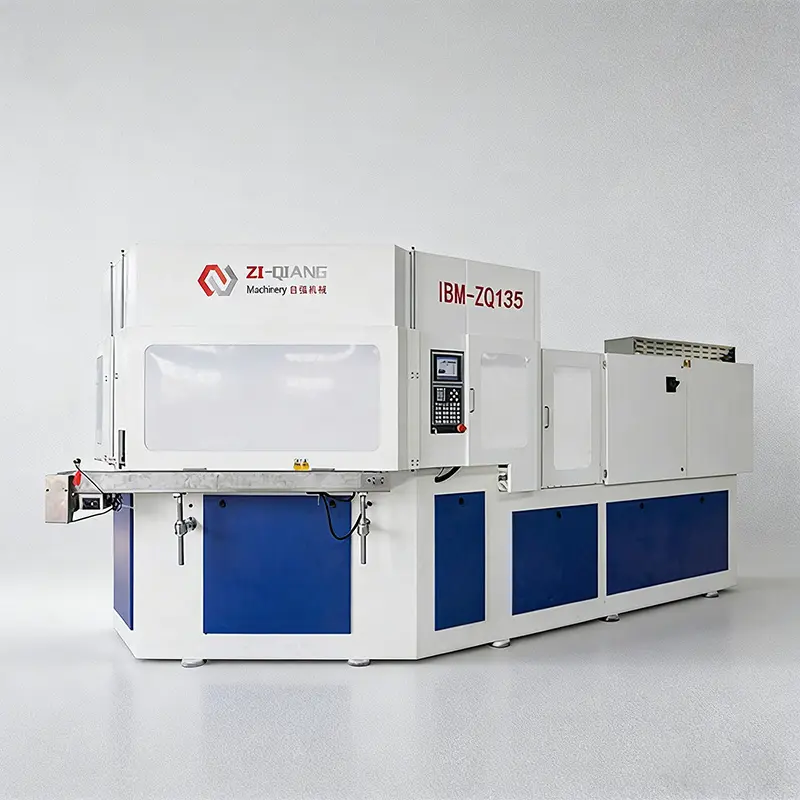
This guide compares the processes in plain terms. It covers cost, quality, materials, output and machine drive options. It is written for importers, brand owners and factory procurement teams who want to compare suppliers before they send an inquiry. Where we describe machines, we refer to the range of Zhangjiagang Ziqiang Machinery Co., Ltd., an injection blow molding machine manufacturer in Jiangsu, China.
What Is Injection Molding?
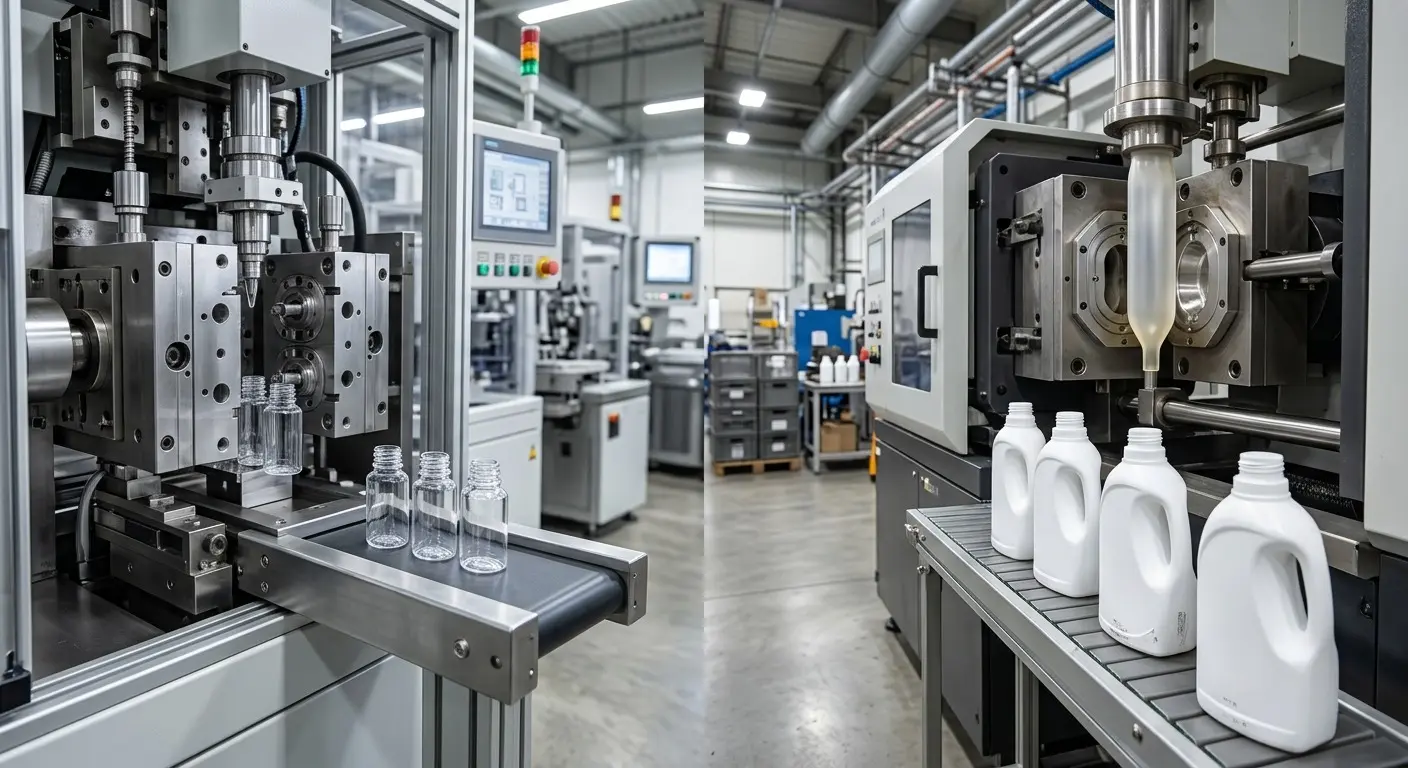
Injection molding melts plastic pellets and injects them into a closed steel mold under pressure. The plastic cools, the mold opens and the part is ejected. This process suits solid or open parts such as caps, closures, wide-mouth containers and bottle preforms.
A standard injection molding machine cannot make a narrow-neck bottle by itself. The mold has no way to form the hollow space behind a small opening. That is why bottle makers add a blowing step. When you compare injection and blow molding, you will often find that the two work together.
If you contact an injection molding machine manufacturer, state clearly what you want to make. A cap line and a bottle line need different equipment.
What Is Blow Molding?
Blow molding forms hollow plastic parts. A hot plastic tube or a preform sits inside a mold. Compressed air inflates it against the mold wall. The plastic cools and the finished bottle is released.A blow molding machine is the usual choice for bottles, jars and drums. Buyers also search for a blow moulding machine, which is the same equipment under the British spelling. Three main routes exist: extrusion, injection blow and injection stretch blow. We explain each one below.
Injection Molding vs Blow Molding: Key Differences at a Glance
The table below shows how injection molding and the three main blow molding routes compare for bottle projects. Use it as a starting point, then confirm details with your supplier.| Feature | Injection Molding | Extrusion Blow Molding (EBM) | Injection Blow Molding (IBM) | Injection Stretch Blow Molding (ISBM) |
| Main products | Solid or open parts, caps, preforms | Bottles, jerry cans, drums | Small, precise bottles | PET bottles and jars |
| Neck finish | Accurate | Usually needs trimming | Accurate, injection molded | Accurate, injection molded |
| Handles | Not applicable | Possible | Limited | Limited |
| Flash and trimming | Depends on mold design | Flash is trimmed and reground | No flash | No flash |
| Common resins | Many thermoplastics | PE, PP | PE, PP, PS, PET-based | PET |
| Typical bottle size | Not a bottle process on its own | Small to very large | Small to medium | Small to large volume |
| Best fit | Caps and closures | Large bottles, handles, PE bottles | Pharmaceutical, cosmetic, eye drop bottles | Clear, strong PET packaging |
How Does the Injection Molding Process Work?
The cycle has four stages:1. Clamping: The machine closes and locks the two mold halves.
2. Injection: A screw pushes molten plastic into the mold cavity.
3. Cooling: The plastic solidifies inside the mold. Cooling time often decides cycle speed.
4. Ejection: The mold opens and pins push out the finished part.
The result is a solid, accurate part. For bottles, the part is usually a preform or a bottle neck section that goes on to a blowing step.
How Does the Blow Molding Process Work?
Blow molding follows a different path:1. Preform or parison: The machine makes a hot plastic tube (extrusion) or an injected preform (injection routes).
2. Mold closing: The bottle mold closes around the hot plastic.
3. Inflation: Compressed air pushes the plastic against the mold wall.
4. Cooling and release: The bottle sets and leaves the mold.
5. Finishing: Extrusion bottles need flash and neck trimming. Injection-based bottles usually do not.
Types of Blow Molding: Extrusion, Injection Blow, and Injection Stretch Blow
Extrusion Blow Molding (EBM)
An extrusion blow molding machine pushes out a hot plastic tube and clamps a mold around it. Air then forms the bottle. EBM handles a wide size range, from small bottles to large industrial containers. It also allows handles. Many buyers choose it as a PE bottle blowing machine for detergent, oil and chemical bottles. Our Extrusion Blow Moulding Machine range includes fully automatic single-station and double-station models.Injection Blow Molding (IBM)
Injection blow molding first injects a preform around a core rod. The rod then carries the preform to a blowing station. The neck is formed by injection, so threads are accurate. Our Injection Blow Molding Machine range covers this route.Injection Stretch Blow Molding (ISBM)
ISBM adds a stretching rod before blowing. Stretching aligns the plastic and gives PET bottles clarity and strength. Our Injection Stretch Blow Moulding Machine range includes semi-automatic, one-step and two-step models.What Is Injection Blow Molding (IBM) and Why Is It Popular for Small Bottles?
An IBM machine makes a finished hollow bottle in one continuous cycle. Four steps run on different stations at the same time: injection, transfer, blowing and ejection. This keeps cycle times short and results repeatable.Small bottles benefit most. Pharmaceutical, eye drop and cosmetic bottles need accurate necks, clean surfaces and steady weight. IBM delivers these features without a weld seam or flash to trim.
Ziqiang offers five IBM models, ZQ40, ZQ60, ZQ80, ZQ110 and ZQ135. The machines use a one-step process and PLC control. You can choose a full electric IBM machine, a servo version or a hydraulic version. The right model depends on bottle volume, cavity number and output target.
Which Process Is Better for Making Plastic Bottles?
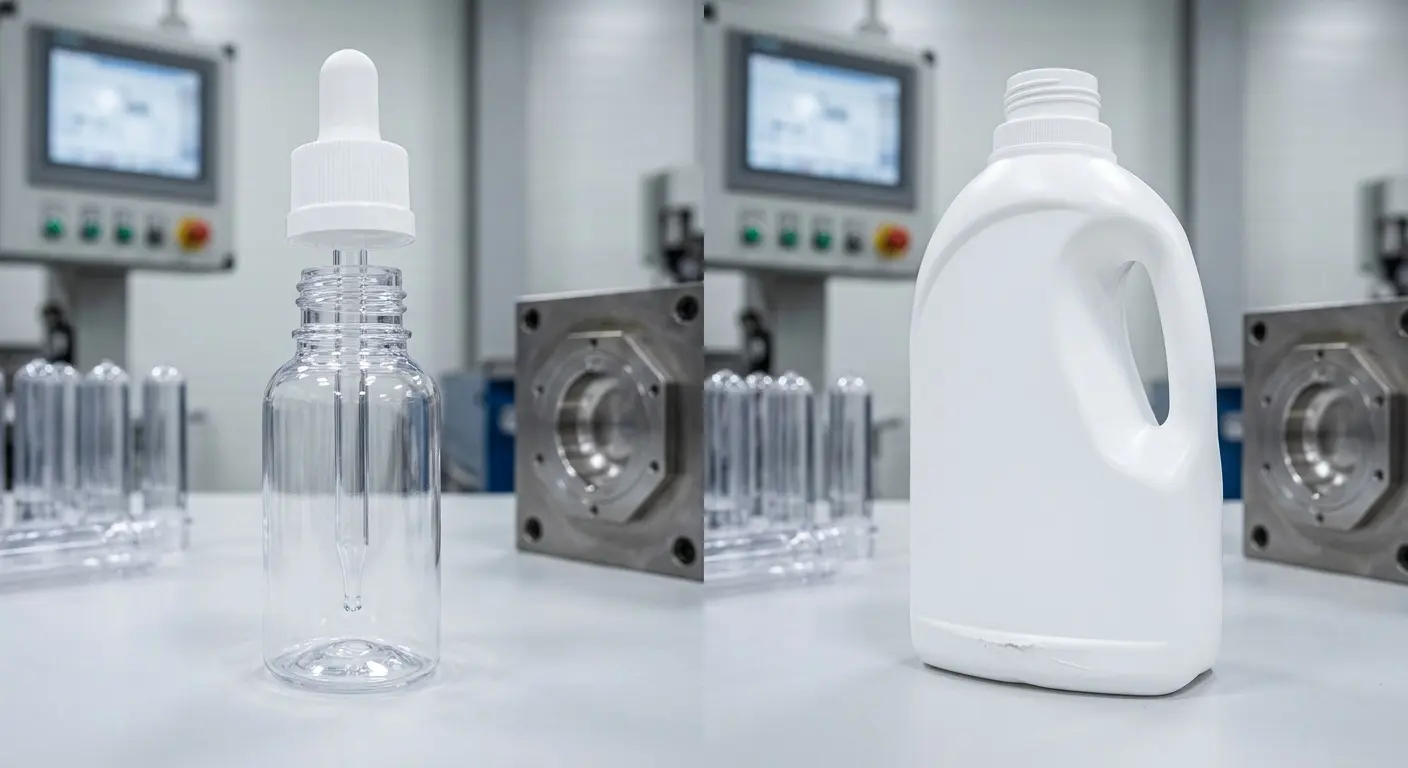
No single process wins every project. Match the process to your bottle:
• Small bottle with a precise neck: IBM is usually the better fit.
• Large bottle, drum or jerry can: EBM is usually more practical.
• Bottle with a handle: Choose EBM.
• Clear, strong PET bottle or jar: ISBM is the usual route.
• Caps and closures: Use a standard injection molding machine.
Start with your bottle drawing or sample, not with the machine type. A good supplier will ask about neck size, volume and resin before recommending a plastic bottles blow molding machine.
Cost Comparison: Machine, Mold, and Production Costs
No fair comparison works without your bottle details, so this section lists cost drivers instead of fixed numbers. Ask each supplier to quote the same specification.Machine cost
The price of a blow molding machine depends on model size, drive type, control system and automation level. All-electric, servo and hydraulic versions sit at different price points. A hydraulic machine usually costs less to buy. An all-electric machine usually costs less to run because it uses less energy.Mold cost
Molds are a major part of the budget. Injection-based routes need a preform mold and a blow mold. Extrusion routes usually need a blow mold only. Cavity number also raises mold cost, but it raises output too.Production cost
Check material waste, energy use, labor and trimming. EBM creates flash that needs trimming and regrinding. IBM creates almost none. For small bottles at steady volume, this can offset a higher mold cost.Compare quotations line by line. A low price may leave out molds, spare parts or training.
Bottle Quality and Precision: Neck Finish, Wall Thickness, and Surface Finish
• Neck finish: Injection-formed necks hold tighter tolerances. This matters for droppers, pumps and child-resistant caps.• Wall thickness: IBM and ISBM control wall thickness through the preform. EBM depends on parison control, so ask about the control system.
• Surface finish: Injection routes give cleaner surfaces and a tidy base. EBM bottles often show a pinch-off line at the bottom.
• Consistency: PLC control and a stable machine drive help each cycle repeat the last one.
Ask for sample bottles or test videos made on the model you plan to buy. Samples tell you more than a brochure.
Best Materials for Each Process: PET, PE, PP, and More
• PET: Best with ISBM. It gives clarity, strength and good barrier performance for water, beverage and food bottles.• PE (including HDPE): Works in EBM and IBM. It suits chemical, household and pharmaceutical bottles.
• PP: Works in EBM and IBM. It offers heat resistance and a firmer feel.
• PS and PET-based resins: Common in IBM for small bottles.
Resin choice affects mold design and temperature settings. State your material early. For food or pharmaceutical use, choose a suitable grade and confirm the rules in your import market.
Production Volume and Speed: Which Process Fits Your Output?
Output depends on cavity number, bottle size, wall thickness and cooling time. More cavities raise output, but they also need a larger machine and a more precise mold.• IBM: Suits small and medium bottles at steady volume. Multi-cavity molds raise output for small sizes.
• EBM: Double-station machines raise output for larger bottles.
• ISBM: One-step lines suit smaller runs. Two-step lines suit high-volume PET production.
Set a realistic hourly target before you request a quote. Your supplier can then size the machine and mold to match.
Which Process Suits Pharmaceutical, Cosmetic, Food, and Household Bottles?
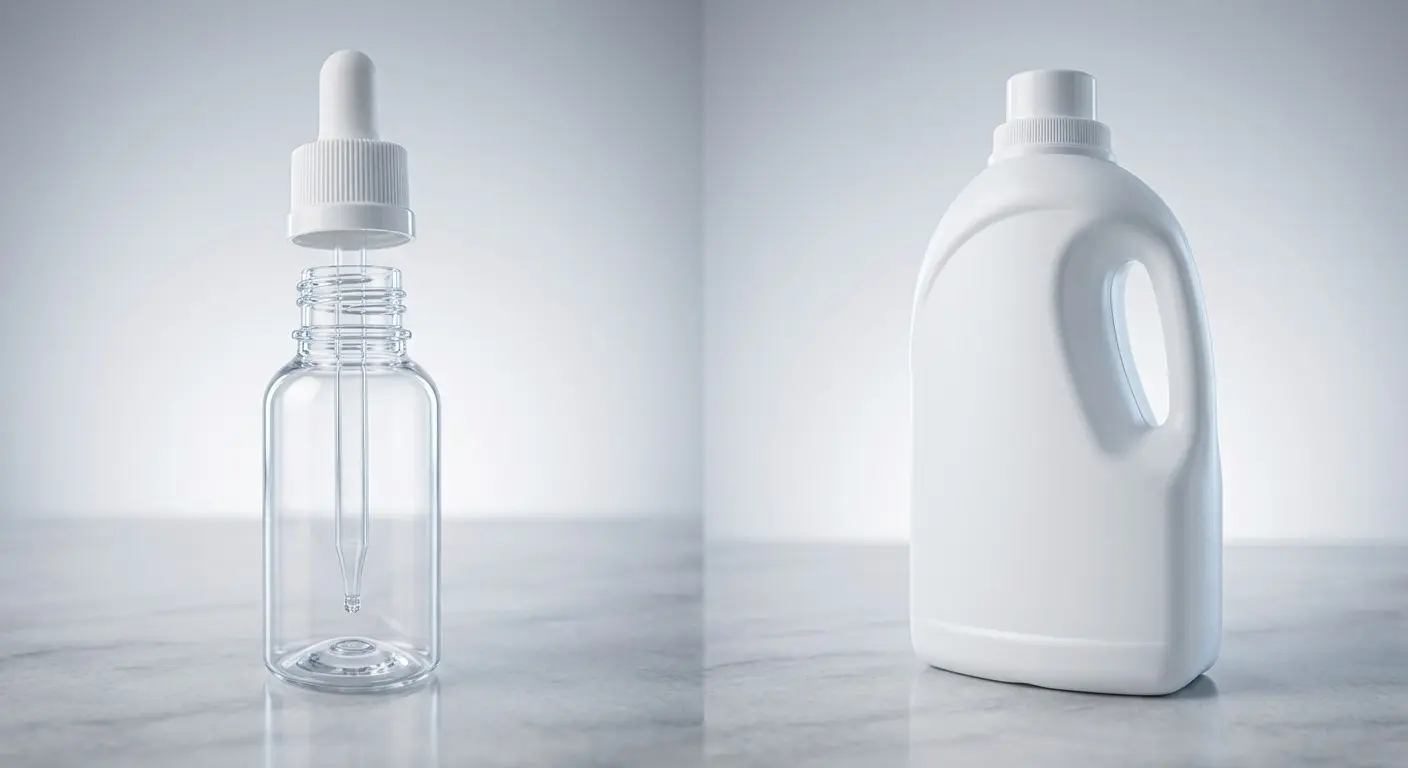
• Pharmaceutical: IBM suits pill, syrup and eye drop bottles. The bottle has no weld seam and no flash.
• Cosmetic: IBM suits lotion, skin care and sample bottles. ISBM suits clear PET jars.
• Food: ISBM suits PET water, juice and food jars. IBM suits small seasoning and supplement bottles.
• Household and chemical: EBM suits detergent, oil and chemical bottles, especially with handles.
Our applications range from eye drop bottles to oil drums, so one supplier can cover several packaging projects.
How to Choose the Right Machine: All-Electric, Servo, or Hydraulic
Ziqiang builds IBM machines with three drive options:• All-electric: Electric motors drive the main movements. This suits clean packaging such as pharmaceutical and eye drop bottles. It usually lowers energy use. A full electric blowing machine also avoids hydraulic oil.
• Servo: A servo motor controls the hydraulic system. It saves energy compared with a standard hydraulic setup and keeps movement stable.
• Hydraulic: A proven design with simple maintenance. It is a practical choice when purchase price matters most.
When you compare blow molding machine suppliers, ask each one for these points in writing:
• A written specification for your bottle
• Sample bottles or test videos
• Mold options, including OEM/ODM design
• Delivery terms, packing and export documents
• Installation guidance, operator training and spare parts
• Warranty terms and a clear technical support channel
To receive a fast and accurate quotation, send your bottle sample or drawing, bottle volume, resin type, target output, preferred drive type, voltage and destination port through our Contact us page.
FAQs About Injection Molding vs Blow Molding
Can injection molding make a plastic bottle?A standard injection process cannot form a narrow-neck hollow bottle by itself. Bottle makers use injection to create a preform or neck, then add a blowing step. This is how injection blow molding and ISBM work.
Is injection blow molding better than extrusion blow molding for small bottles?
For small bottles with precise necks, IBM is usually the better choice. It gives accurate necks and almost no flash. EBM is often better for large bottles or designs with handles.
Which process works best for PET bottles?
ISBM is the usual route for PET bottles. Stretching gives better clarity and strength than other methods.
Which materials can an IBM machine process?
IBM machines commonly process PE, PP, PS and PET-based resins. Tell your supplier the resin and the product inside the bottle, and ask them to confirm compatibility before you order.
What information do I need to request a quotation?
Send a bottle sample or drawing, volume, material, target output, preferred drive type, voltage and destination port. A complete request leads to a faster offer.
Do Chinese manufacturers provide molds and export support?
Many do. Ziqiang supplies OEM/ODM molds, auxiliary machines and turnkey projects, and offers worldwide export support. Confirm delivery terms, installation help and spare parts in writing before you order.
Conclusion
The right choice between injection and blow molding depends on your bottle, your resin and your output target. Use IBM for small, precise bottles. Use EBM for large bottles and handles. Use ISBM for clear PET packaging. Ask for samples, written specifications and clear export terms before you commit.Ziqiang Machinery supplies all-electric, servo and hydraulic IBM machines, together with extrusion and stretch blow machines, auxiliary equipment and OEM/ODM molds. Send us your bottle sample or drawing, and our team can provide product details, a quotation, mold customization, sample options and technical support. Contact us today, message us on WhatsApp at +86 13913614902, or email isabel@ziqiangmachine.com.